



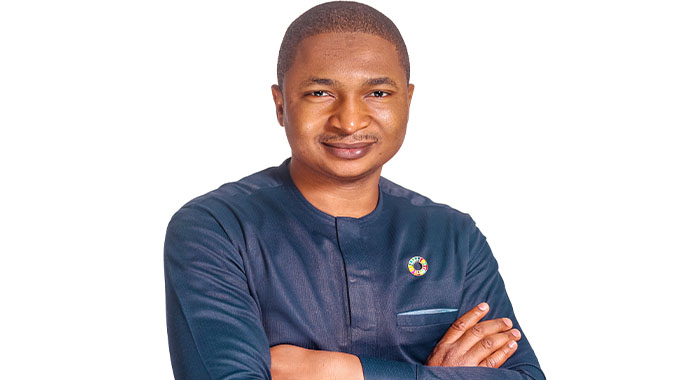
On Sunday, a human rights organization operating under the banner of Connected Development claimed that electoral criminals were plotting to rig the general election by tampering with the results.
The alarm was raised by CODE’s Chief Executive Officer, Hamzat Lawal, who said he got the information from the organization’s 20,000 community-driven observers on the ground.
Lawal claimed that the rigging technique included slow uploading of results on the INEC result portal, relocation of state collation centers without adequate notice to stakeholders, outright denial of accredited observers access to new locations, and issues such as elections not taking place in some local government areas but results being collated, among other things.
According to him, the criminal acts endanger the credibility of this election and make it more likely that many people will accept the results announced by the Independent National Electoral Commission, INEC.
“Connected Development and its partners are currently calling on the Independent National Electoral Commission to be truly independent and to serve the people the constitution has mandated it to serve,” he said.
“With 20,000 community-driven observers on the ground, CODE and its partners, using our Electoral Intelligence tool, Uzabe have noticed a worrisome trend across the nation that points to the gaps and unpreparedness within the structure of the electoral process which is threatening the credibility of this election.
“We have several reports indicating that States like Ekiti, Cross River, Imo, and Rivers State have had their Local Government Area (LGA) collation centers relocated without adequate information to stakeholders.
“In Ekiti especially, we have it on good authority that all LGA collation centers were relocated, and in most cases, accredited observers were outrightly denied access, and new locations were shrouded in secrecy.
“We have seen issues of elections not holding in some local government areas and results are being collated.

“This happened in Oru East, Imo State, where our observers confirmed that no election was held and in fact, some voters were asked to vote in a private residential building of a party chieftain, which is clearly against INEC guidelines and the electoral act. Nonetheless, we have outcomes from that LGA. This is a slap in the face to INEC and everything our constitution stands for.
“There is still a growing number of reports that several polling units opened polls very late and ended the process of voting while voters were still in the queue, citing nightfall as the reason, thereby disenfranchising thousands of voters across various polling units.
“The INEC 2023 election guidelines state that voting should continue until the last person in line votes, but this was clearly not followed.
“We also noted that in many polling stations, BVAS were reported to be malfunctioning and observers even recorded a shortage of necessary materials.
“We are deeply concerned about the slow upload of results on the INEC result portal. The resulting portal currently has only 40,000 polling unit results.
This is especially troubling given that INEC established over 50,000 new polling units with fewer than 100 registered voters in each, and elections were held in all of these polling units at 2:30 pm yesterday, with the expectation that all polling unit results would have been uploaded by midnight yesterday.
“This expectation is coming from the experience we observed in the Ekiti and Osun Gubernatorial elections, where we witnessed over 95 percent of the results uploaded before midnight on election day.
“Nigerians deserve efficiency, they deserve fairness, with people denying themselves sleep and keeping wake under the rain, Nigerians deserve better from public institutions.
As a result, we are urging INEC to address these concerns as soon as possible. We also request that the Nigerian police, as the lead agency for election security, monitor.
“The joint security forces deployed for this election have performed admirably and are already overburdened.
“A lack of adequate information, access to independent observers, and strict adherence to the Electoral Act of 2022 and the INEC’s guidelines will cause apprehension and a trust deficit, which may lead to civil unrest and rejection of the overall outcome, and should be addressed immediately by the INEC chairman.”


