



Last week, a bipartisan group of House lawmakers introduced legislation to prevent minor federal officials who were never confirmed by the Senate from imposing billions of dollars in regulatory costs on Americans each year.
Reps. Ben Cline, R-Va., Jared Golden, D-Maine, and a handful of other Republicans introduced the “Ensuring Accountability in Agency Rulemaking Act” last week. The bill is an attempt to ensure that all federal regulations are legally initiated and issued by Senate-confirmed federal officials who are thus more accountable to American voters.
Cline claims that too many regulations are issued by minor agency officials, resulting in a slew of new rules that contribute to soaring federal mandates, which he claims cost America 10% of its GDP each year.

“The issue is widespread,” Cline told Fox News Digital. “It just varies in severity depending on which agency you’re dealing with.”
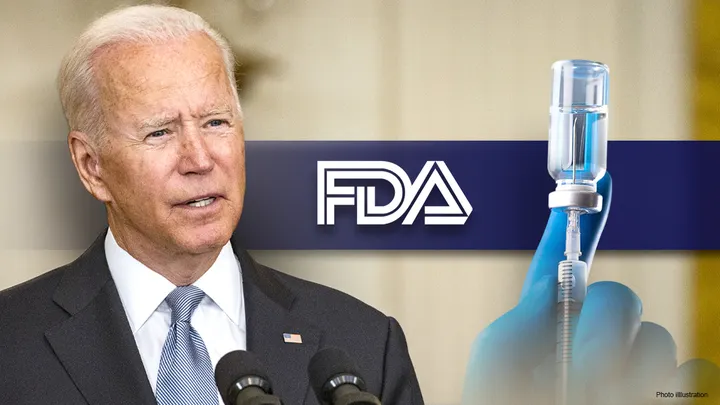
The bill is a response to a 2019 Pacific Legal Foundation study, which found that 98% of all rules issued by the Department of Health and Human Services (HHS) Food and Drug Administration (FDA) between 2001 and 2017 were issued “illegally” by non-Senate confirmed officials and that other agencies had similar issues. The study discovered that 25 of those rules had a greater than $100 million economic impact and that the FDA’s high incidence of rules issued by minor officials meant that more than 70% of all HHS rules were “unconstitutional.”

According to Joe Luppino-Esposito, the foundation’s deputy legal policy director, his organization has been involved in lawsuits against federal rules that have not been issued properly, forcing some agencies to go back and get sign-off from appointed officials.
The legal theory underlying this effort is that the Appointments Clause of the Constitution requires senior appointed officials to impose regulatory burdens on Americans, a view supported by two Supreme Court cases: Buckley v. Valeo in 1976 and Edmond v. United States in 1997. According to the foundation, these cases support the notion that “only principal agency officers (such as department heads and assistant secretaries confirmed by the Senate) may issue regulations with the force of law.”

The bipartisan nature of Cline’s bill, according to Luppino-Esposito, demonstrates that “people on both sides of the aisle are recognizing” the problem of delegating too much authority to minor, unknown officials who aren’t directly accountable to the people.
Cline stated that he and Golden both joined the House Problem Solvers’ Caucus at the same time and that they both recognize the importance of addressing this growing issue.
“We both share an outlook on overreaching executive branch authority, and I think we’re trying to solve a problem here that’s gotten… to be a significant program and is affecting Americans’ daily lives,” he said.
Cline also predicted that the bill would be moved quickly by the new House Republican leadership.
“Leadership is going to be interested in setting down markers on executive branch overreach, and so they’ve looked to bills like this one that has statistics and facts to back them up, so hopefully we’ll see this move fairly soon,” he said.
Most federal rules would have to be “issued and signed by an individual appointed by the president, by and with the advice and consent of the Senate,” according to the bill. The bill also states that these senior officials must initiate rules.


