



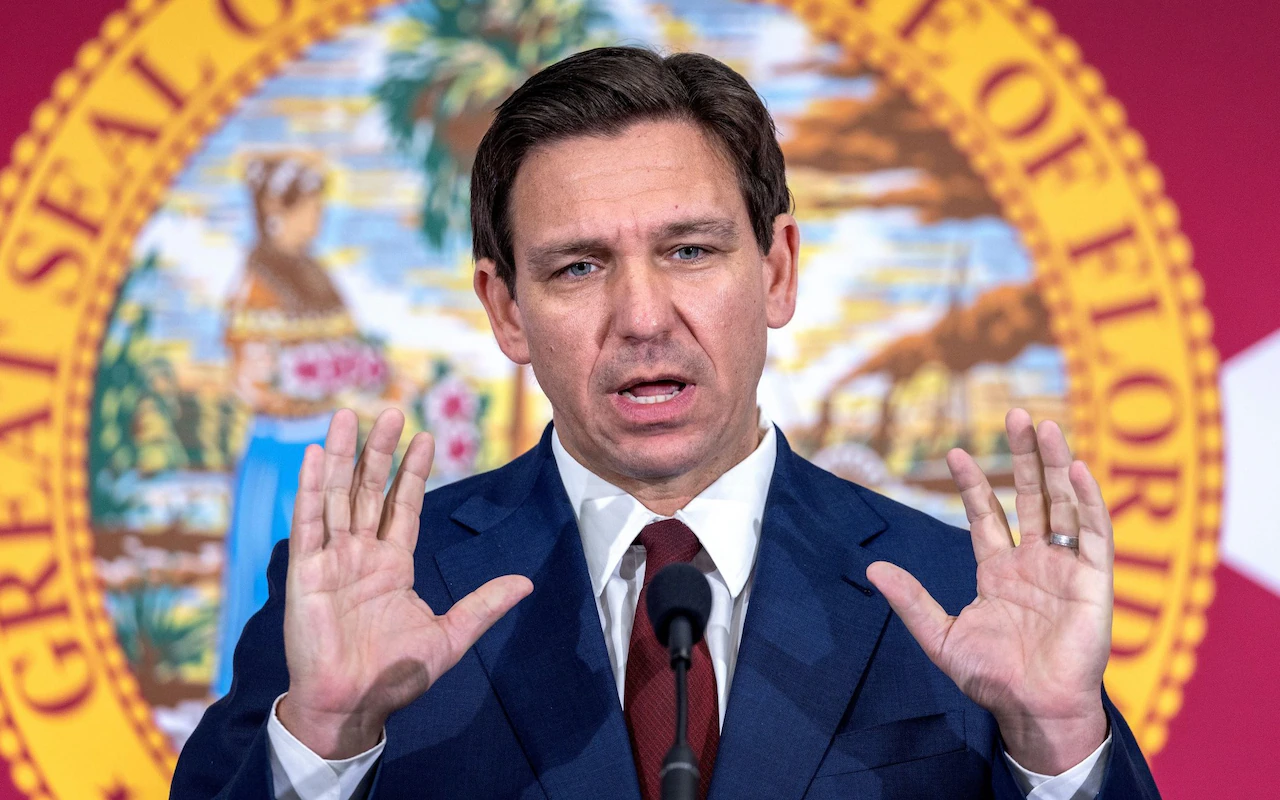
In a move that has sparked debate across the Sunshine State, Florida Governor Ron DeSantis has announced a new policy aimed at removing “political” references from the state’s school books.
The controversial decision has been met with both praise and criticism, with some parents and educators lauding the move as a necessary step towards ensuring that students are taught without bias, while others argue that it amounts to censorship and an attempt to rewrite history.
At the heart of the issue is the question of what constitutes “political” content in school books. According to DeSantis, the policy will target books that “distort historical events and portray American society in a negative light.” He cited examples of books that he said portrayed the country as “systemically racist” and promoted critical race theory, a framework that examines the ways in which race and racism intersect with social, economic, and political power.
🧵The political indoctrination of children through the K-12 public education system is a very real and prolific problem in this country.
Just look at some of these examples from textbooks submitted this year to @EducationFL. All CAUGHT & all FIXED under @GovRonDeSantis' watch.
— Bryan Griffin (@BryanDGriffin) May 9, 2023
Critics of the policy, however, argue that it is a thinly veiled attempt to suppress certain viewpoints and ideas that are deemed politically undesirable by the current administration. Some have also raised concerns about the potential impact on academic freedom and the ability of educators to teach critical thinking skills.
Despite the controversy, some parents and educators have expressed support for the governor’s decision. One such parent is Sarah Hernandez, a mother of two in Miami-Dade County. Hernandez says she’s seen books in her children’s schools that she feels are overly political and biased.


“I want my kids to learn the truth, but I don’t want them to be indoctrinated with someone else’s political agenda,” Hernandez says. “I think it’s important to have a balanced approach to teaching, and if that means taking out some of the more political stuff, I’m all for it.”


While the debate over the policy rages on, one thing is certain: the decision has sparked a conversation about the role of politics in education, and the responsibility of educators and policymakers to ensure that students are taught in a way that is fair, unbiased, and inclusive.


