

Ruto Responds to Deadly Protests with Tough Warning: “This Country Won’t Be Overthrown”
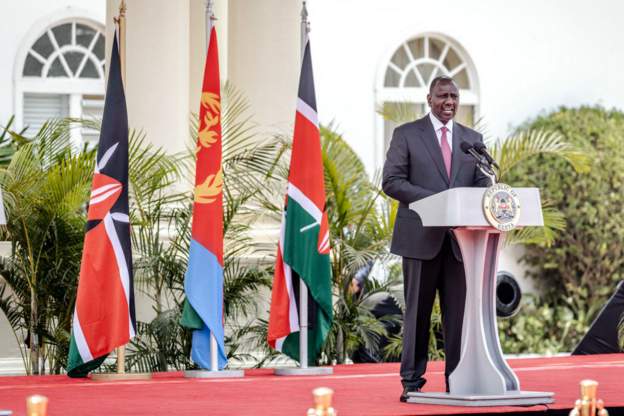
Kenya’s President William Ruto didn’t hold back during a recent speech in Nairobi, where he addressed the growing unrest that has gripped the country. His message was clear: any attempt to destabilize the government through force won’t be tolerated.
Speaking in Swahili to supporters, Ruto condemned what he described as an effort to cause chaos and oust his administration before the next election. “This country will not be destroyed by a few impatient people trying to take over power outside the law,” he declared.
His remarks come after weeks of protests, most recently on July 7—Saba Saba Day—when 31 people reportedly died across Kenya. The demonstrations, initially sparked by anger over taxes, have now evolved into a broader outcry against corruption, rising costs of living, and police violence. Many of the protesters are young people, frustrated by limited job opportunities and what they see as a government that’s out of touch.
“This is a democratic country,” Ruto continued, warning those involved in violent protests that any attacks on the police would be treated as acts of war. He controversially instructed law enforcement to shoot violent protesters in the leg—an order that has drawn widespread concern.


Ruto, who came to power in 2022, is now facing his biggest challenge yet. Protesters say the government has not only failed to meet their economic needs but has also used excessive force to silence them. The recent death of a teacher in police custody has only added to public outrage.
In the past two months alone, over 50 people have died in the unrest, and hundreds more have been arrested or injured.
Adding fuel to the fire, former deputy president and once Ruto’s close ally, Rigathi Gachagua, has accused the government of turning against its people. Gachagua, now a vocal critic, called on citizens to boycott any businesses or institutions tied to the current administration.
The fallout between Ruto and Gachagua has turned political tensions into a deeply personal feud. Ruto’s allies have accused Gachagua of backing the protests financially—a charge he firmly denies.
Meanwhile, rights organizations and international bodies like the United Nations are watching closely. The UN expressed deep concern over the use of deadly force during the demonstrations, reminding authorities that firearms should only be used to protect lives in immediate danger.
As Kenya’s political landscape grows more tense, the voices on the streets are only getting louder. Whether the government will soften its stance or double down remains to be seen—but one thing is certain: the people aren’t staying quiet.