


If you’ve been keeping up with the latest tech news from Berlin this week, you’ve probably come across the term Qi2 more than once. Notably, both Anker and Mophie have unveiled products that embrace this new standard.
So, to address the burning questions – what’s the deal with Qi2? Is it worth your attention, and can the sequel truly outshine the original? Well, the answers to the last two questions are a resounding “probably” and “definitely.” Qi2 represents more than just an incremental upgrade to the familiar wireless charging standard.
You’re likely familiar with the first-generation Qi, which has been around since the early days of Obama’s presidency (back when hope and change included wireless charging). Nokia was among the first to embrace it for the Lumia 920 – the Nokia of yesteryears, not today’s HMD Nokia. We’re talking Windows Phone 8-era Nokia. Samsung soon followed suit with the Galaxy S3. By the time Apple adopted it for the iPhone 8, Qi had become firmly established in the Android ecosystem.
Qi has since dominated the landscape, appearing not only in smartphones but also in a wide range of accessories and even furniture in public spaces. According to the Wireless Power Consortium, there are currently over 9,000 Qi Certified products available on the market.

Image Credits: Apple
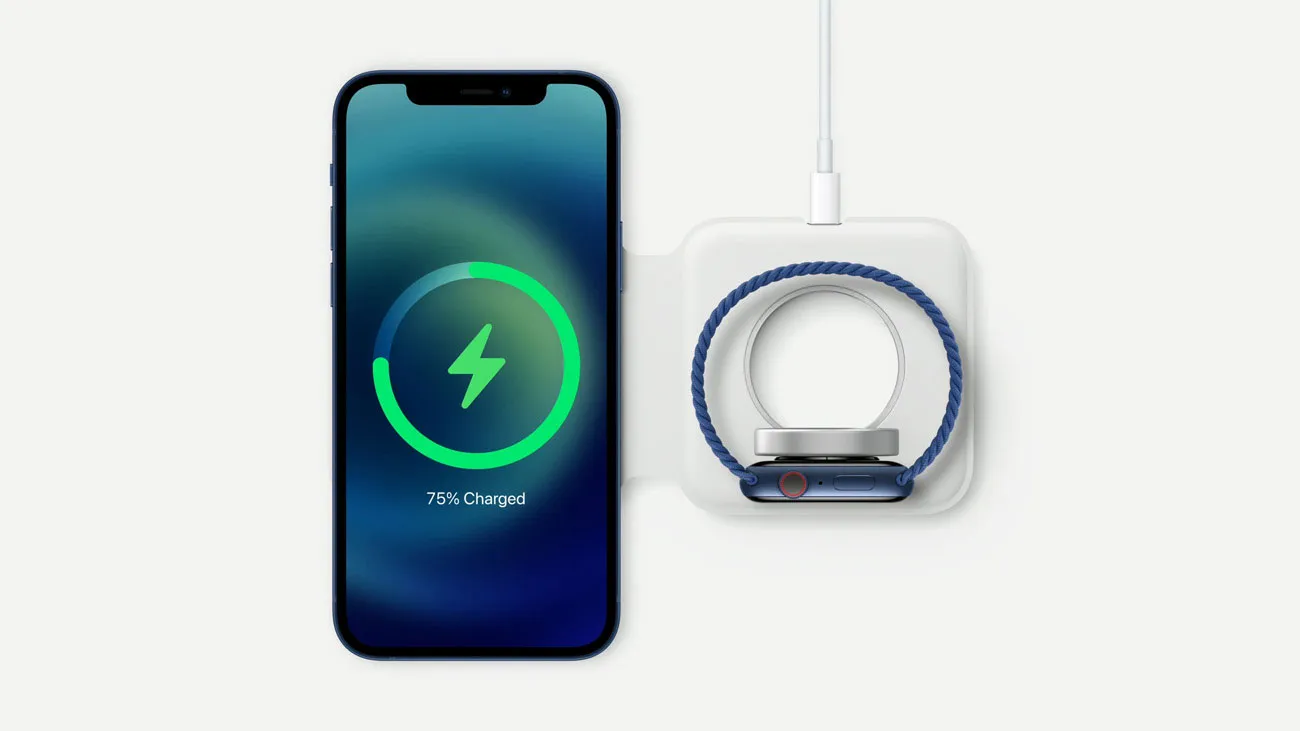
Now, fifteen years after the original launch, Qi is set to make a splash with Qi2, expected to debut in Q4 initially through third-party accessories. The Wireless Power Consortium has highlighted improved power efficiency as one of the key advancements, meaning less energy is wasted during the charging process. However, the most significant enhancement for most users is the introduction of the “Magnetic Power Profile.” To earn certification, manufacturers must now incorporate magnetic locking. This addresses a long-standing challenge with Qi – aligning the device precisely for charging. With magnets on both the device and charger, it all snaps effortlessly into place.
Think of it as akin to the iPhone’s MagSafe, but extended across various devices. This means that in the coming years, you can expect many Android phones to adopt their version of MagSafe. Despite Apple’s initial hesitance, there’s a good chance the iPhone 15 could be one of the first devices to support Qi 2 (perhaps Apple will even give it a “MagSafe 2” branding, who knows?).
According to the consortium, “Qi2 will enable development of faster wireless charging while ensuring the process remains safe, won’t shorten battery life, and won’t damage the receiver.” Qi2 will also usher in new possibilities for product innovation, such as the integration of magnetic locking in AR/VR headsets and the support of accessories that magnetically attach to the back of phones, like an extra battery.
With giants like Apple, Samsung, Lenovo, Qualcomm, Google, and Microsoft among the 344 companies involved in the consortium, we can expect a swift rollout of this new standard. Qi2 will maintain backward compatibility with its predecessor, though using a Qi2 device with a Qi2 charger will offer the fastest and most efficient experience.