


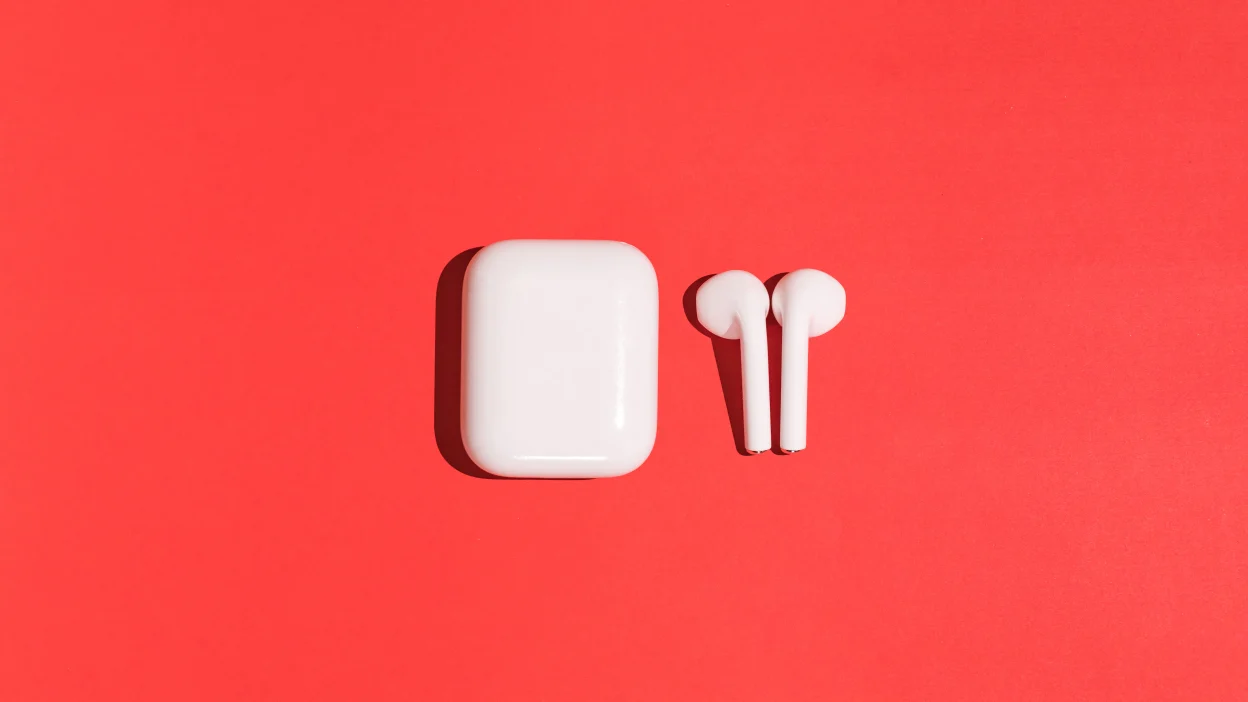
Apple’s AirPods Pro (Opens in a new tab) is a significant improvement over the standard AirPods (Opens in a new tab). The base model allows you to listen to music and podcasts, talk to Siri, activate features with a tap, check the battery charge, and find them if they go missing. However, with the Pro, you can get a better fit, fully enhance the audio quality, optimize battery charging, and enjoy other cool features. Here are some pointers to help you make the most of your AirPods Pro.
Take the Ear Tip Fit Test


One disadvantage of the standard AirPods is that they use a one-size-fits-all approach with an in-ear design that does not always fit all ears properly. If the fit isn’t snug, the AirPods will easily fall out of your ears (Opens in a new tab). The AirPods Pro address this shortcoming by adopting an in-canal design with replaceable tips for small, medium, and large ear canal sizes (the 2nd-gen AirPods Pro also offers an extra small option).
The AirPods Pro comes with medium tips by default, but you can easily change sizes. Pull firmly on the current tips until they detach from the base to replace them.
Place the new tips so that the white circle in the center meets the black circle in the center of the base. Then push them together until they click into place.
The standard AirPods have the disadvantage of being one-size-fits-all, with an in-ear design that does not always fit all ears properly. The AirPods will easily fall out of your ears if the fit isn’t snug (Opens in a new tab). The AirPods Pro address this shortcoming with an in-canal design that includes replaceable tips for small, medium, and large ear canal sizes (the 2nd-gen AirPods Pro also offers an extra small option).
The AirPods Pro comes with medium tips by default, but you can easily switch them out. Continue to the screen to test the fit of your ear tips, then tap the Play button. A brief music clip is played.
Following that, the app will tell you if your current tips are a good fit. If not, it will suggest that you adjust your tips or try a different size. Continue through all three sizes until the app indicates that both AirPods have received the Good Seal of Approval.
Change the Name of Your AirPods Pro

Your AirPods Pro’s name appears in a few places, but you’re not stuck with it. Go to Settings > Bluetooth on your iPhone. Tap the AirPods Pro info icon, then tap the current name. You can then change the existing name or delete it entirely and start over. When you’re finished, tap Done.
Control Music with a Press

By pressing the stem of either your left or right AirPods Pro, you can control the flow of music. To accomplish this, press the stem with your thumb and forefinger until you hear a low click. Press once to pause/play, twice to advance to the next track, and three times to return to the beginning of your current track or to the previous track.
Customize the Presses

By default, pressing and holding the stem of either AirPod Pro toggles between Noise Cancellation and Transparency, but you can switch between the two. While wearing the AirPods Pro, go to Settings > Bluetooth and press the info icon next to your AirPods. Tap the Left or Right entry under the Press and Hold AirPods section.
When you long-press, you can keep Noise Control activated but add the Off setting to the mix by tapping its entry. Alternatively, you can switch from Noise Control to Siri by tapping the Siri entry at the top. As a suggestion, keep Noise Control enabled on one bud while switching to Siri on the other.
Adjust the Volume on 2nd Gen AirPods Pro

The second-generation AirPods Pro improves the earbuds’ audio quality and adds new features. One new feature lets you adjust the volume by swiping up and down on a sensor on the AirPods’ stem. Go to Settings > Bluetooth > [Your AirPods info icon] > Accessibility to enable this. Turn on the Volume Swipe switch. By selecting Longer or Longest, you can also adjust the time between swipes to avoid accidental volume changes.
Play some music or other audio, place your thumb on the stem of either AirPod and swipe up or down on the control with your index finger. The volume will increase or decrease as you move.
Turn on Noise Cancellation

The AirPods Pro has two listening modes that can help reduce background noise. The Noise Cancellation feature cancels out almost all background noises, making it useful in noisy environments where you need to hear your audio clearly.
Transparency mode muffles background noise, allowing you to hear it while not interfering with your audio. This is a good option for public places where you still need to hear announcements or be aware of your surroundings.
Long press the stem of either bud until you hear a chime to switch between Noise Cancellation and Transparency mode. There are two options if you prefer to use your iPhone.
Open Control Center and then press the audio control. Tap the Noise Control icon, then select Noise Cancellation or Transparency, or simply tap Off to disable Noise Control entirely. You can also go to Settings > Bluetooth > [Your AirPods info icon], then select Noise Cancellation, Off, or Transparency under Noise Control.
Tweak Accessibility Settings

To further customize your AirPods Pro’s accessibility features, navigate to Settings > Bluetooth > [Your AirPods info icon] > Accessibility. You can adjust the speed at which you must press the stems of your AirPods to pause, play, skip ahead, or go back. You can also change the noise cancellation mode by adjusting the duration of pressing the stems. You can also use one AirPod to enable noise cancellation and control the volume with a swipe.
Improve Sound Quality

Headphone Accommodations, which was introduced in iOS 14, improves the audio from your AirPods by boosting softer sounds and certain frequencies.
Turn on the switch in Settings > Bluetooth > [Your AirPods info icon] > Accessibility > Audio Accessibility Settings > Headphone Accommodations. To hear a sample, tap Play Sample, then adjust the audio to achieve a balanced tone across a range of frequencies, a vocal range for middle frequencies, or brightness for higher frequencies. You can also slightly, moderately, or strongly boost softer sounds.
You might want to experiment with playing music, podcasts(Opens in a new tab), audiobooks, or other audio from your own library to see which settings work best for you. Alternatively, you can customize the audio output by tapping Custom Audio Setup and answering a few questions. Your audio settings will be altered based on your responses.
Turn on Spatial Audio

Spatial audio(Opens in a new tab), a feature introduced in iOS 14 and exclusive to AirPods Pro and the third-generation AirPods, adds head tracking and surround-sound effects to supported videos. You must be running iOS 14 or higher, and your AirPods Pro firmware must be version 3A283 or higher (Settings > Bluetooth > [Your AirPods info icon] > Version) to enable this.
Play a movie or TV show from one of the following services: Apple TV+(Opens in a new tab), Disney+, iTunes, and HBO Max(Opens in a new tab). If you chose a video that is compatible, you should now hear the audio shift in surround sound as you move your head, body, or iPhone.
Enable Adaptive Transparency on 2nd Gen AirPods Pro

Another new feature of the second-generation AirPods Pro is Adaptive Transparency(Opens in a new tab), which automatically reduces the volume of any loud sounds around you to protect your hearing. To enable this feature, go to Settings > Bluetooth > [Your AirPods info icon] and toggle the Adaptive Transparency switch on. Any loud sounds detected while wearing your AirPods should now be reduced.
Share With Other AirPods Users

You can share your audio(Opens in a new tab) with anyone who has a pair of AirPods Pro, regular AirPods, or Beats headphones. Access the Control Center on your iPhone while wearing your AirPods Pro and tap the AirPlay icon for the current audio.
Tap Share Audio and select the second pair of AirPods or Beats headphones. Then you should see entries for both headphones. Tap the circle to connect it to the other set. You can now adjust the volume for both or each separately.
Turn Your AirPods Into a Hearing Aid

Through a feature called Live Listen, you can use your AirPods Pro as a hearing aid. To begin, add the feature to Control Center on your iPhone. To add Hearing to Control Center, go to Settings > Control Center, then tap the plus sign next to it.
Insert your AirPods Pro into your ears. To enable the feature, open Control Center, tap the Hearing icon and then tap Live Listen. Place your phone in close proximity to the person or audio source you want to hear more clearly or loudly, and the sound will be amplified. By tapping the entry in Control Center, you can disable Live Listen.
Check the Battery Charge

You can check the charge status of your AirPods Pro and charging case using your iPhone. Close the case and place both AirPods Pro inside. A card appears on the screen of your iPhone to show the charge levels of both the case and the AirPods.
When you remove one of the AirPods from the case, the card changes to show the charging status of each AirPod separately. When you take them both out of the case, the card displays the charging status of the AirPods but not the case.
Finally, you can help extend the overall life of your AirPods Pro battery by instructing your earbuds to charge past 80% before being used. Go to Settings > Bluetooth > [Your AirPods info icon] and enable Optimized Battery Charging.