


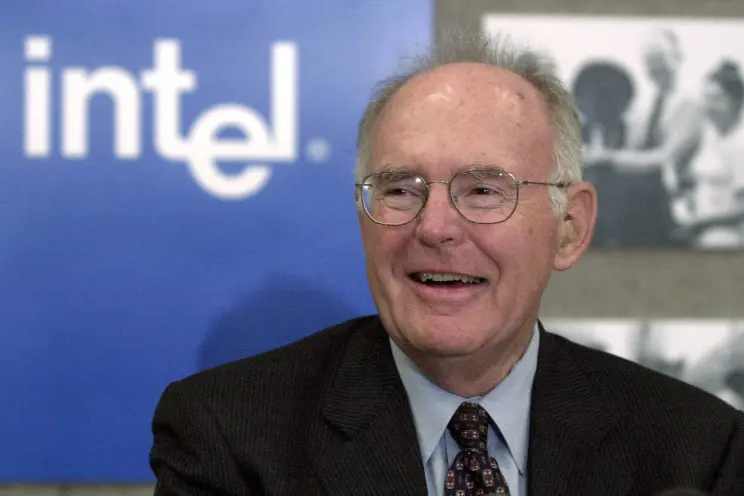
Gordon Moore, a pioneer in the semiconductor industry whose “Moore’s Law” predicted a steady rise in computing power for decades, died Friday at the age of 94, according to Intel Corp (INTC.O).
Moore died surrounded by family at his home in Hawaii, according to Intel and Moore’s family philanthropic foundation.
Moore was the rolled-up-sleeves engineer in a triumvirate of technology luminaries who eventually put “Intel Inside” processors in more than 80% of the world’s personal computers, co-founding Intel in 1968.
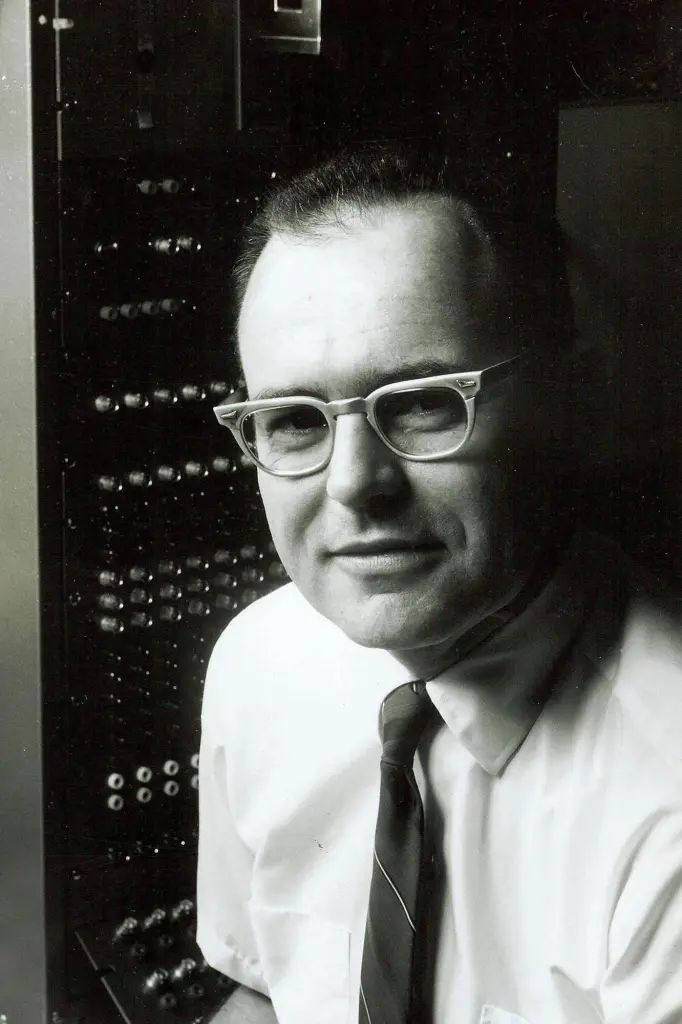
Moore noted in a 1965 article that, due to technological advances, the number of transistors on microchips had roughly doubled every year since integrated circuits were invented a few years before.
His prediction that the trend would continue became known as “Moore’s Law,” and it pushed Intel and rival chipmakers to aggressively target their research and development resources to ensure that rule of thumb came true.
“Integrated circuits will lead to such wonders as home computers – or at least terminals connected to a central computer – automatic controls for automobiles, and personal portable communications equipment,” Moore predicted in his paper, written two decades before the PC revolution and more than 40 years before Apple released the iPhone.
Following Moore’s article, chips became more efficient and less expensive at an exponential rate, driving much of the world’s technological progress for the next half-century and allowing the advent of not only personal computers, but the internet and Silicon Valley behemoths such as Apple, Facebook, and Google.
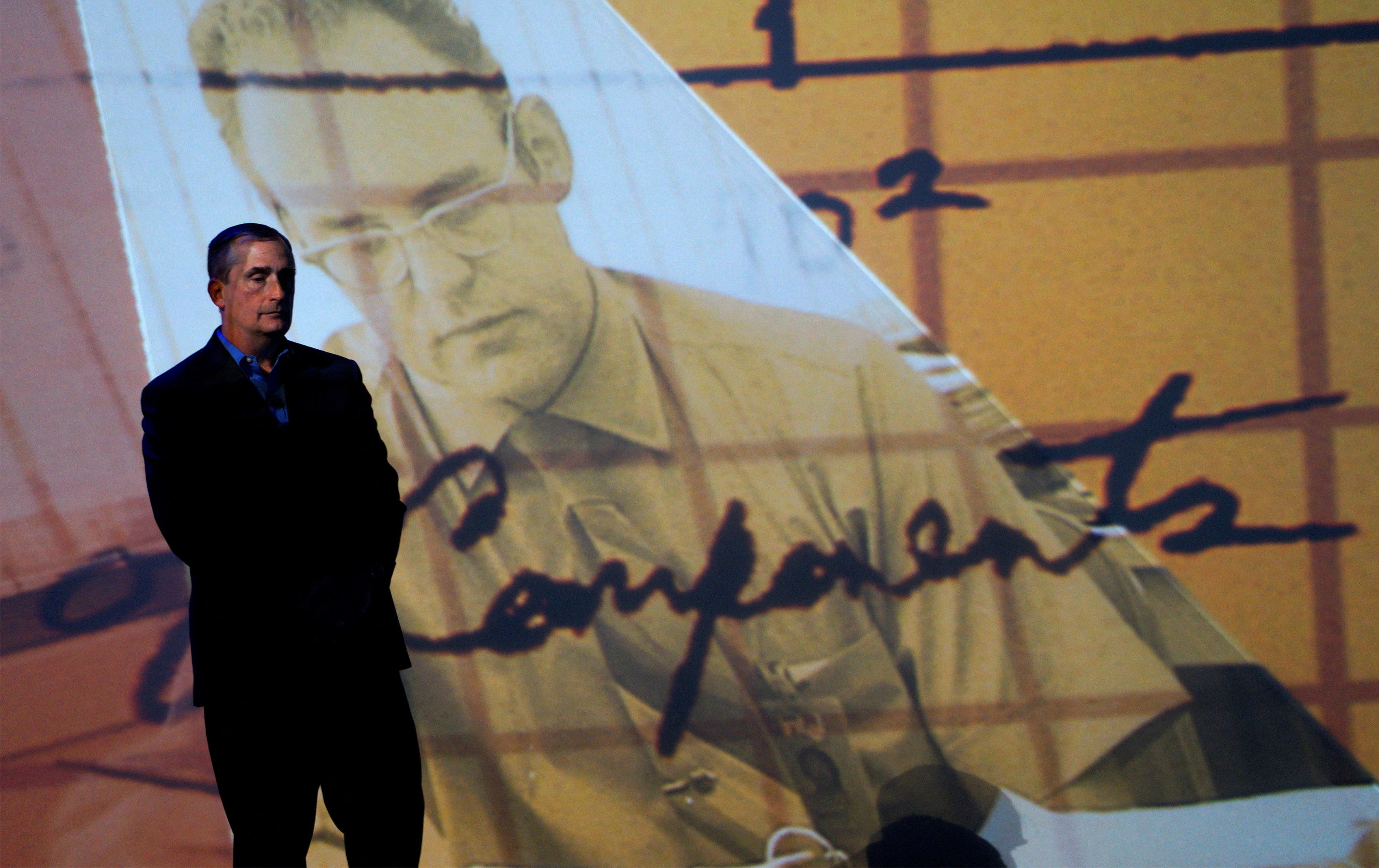
“It’s nice to be in the right place at the right time,” Moore said in a 2005 interview. “I was extremely fortunate to enter the semiconductor industry at its inception. And I had the opportunity to progress from a time when we couldn’t make a single silicon transistor to a time when we could fit 1.7 billion of them onto a single chip! It’s been an incredible journey.”
In recent years, Intel rivals such as Nvidia Corp (NVDA.O) have claimed that Moore’s Law no longer holds true, claiming that advances in chip manufacturing have slowed.
Despite manufacturing setbacks that have resulted in Intel losing market share in recent years, current CEO Pat Gelsinger has stated that he believes Moore’s Law still holds true as the company invests billions of dollars in a turnaround effort.
Moore was a great and respected friend for more than six decades, according to Morris Chang, the founder of Taiwan Semiconductor Manufacturing Co Ltd (TSMC) (2330. TW), the world’s largest contract chipmaker.
“With Gordon gone, nearly all of my first-generation semiconductor colleagues are gone,” Chang said in a TSMC statement.
‘ACCIDENTAL ENTREPRENEUR’
Despite having predicted the PC movement, Moore admitted to Forbes magazine that he did not purchase a home computer until the late 1980s.
Moore, a San Francisco native, received his Ph.D. in chemistry and physics from the California Institute of Technology in 1954.
He joined the Shockley Semiconductor Laboratory, where he met future Intel cofounder Robert Noyce. They left the “traitorous eight” in 1957 to found Fairchild Semiconductor. Moore and Noyce left Fairchild in 1968 to found the memory chip company Intel, an abbreviation for Integrated Electronics.
Andy Grove, a Fairchild colleague who would lead Intel through much of its explosive growth in the 1980s and 1990s, was Moore and Noyce’s first hire.
Moore described himself as an “accidental entrepreneur” who had no burning desire to start a business, but he, Noyce, and Grove formed a formidable partnership.
Moore was the person who rolled up his sleeves and spent countless hours tweaking transistors and refining Noyce’s broad and sometimes ill-defined ideas, efforts that often paid off. Grove, Intel’s operations and management expert, completed the team.
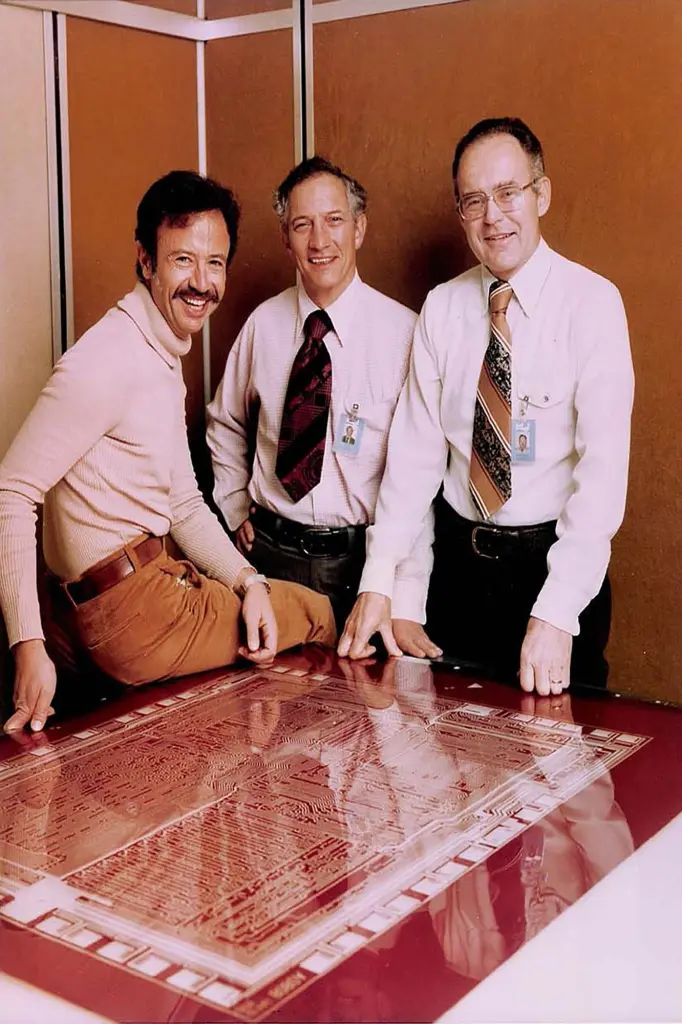
Moore’s obvious talent inspired other engineers working for him, and Intel invented the microprocessors that would pave the way for the personal computer revolution under his and Noyce’s leadership.
He was executive president until 1975, and he and CEO Noyce saw themselves as equals. Moore was chairman and CEO from 1979 to 1987, and he remained so until 1997.
Forbes magazine estimated his net worth to be $7.2 billion in 2023.
Moore had been a long-time sport fisherman, traveling the world to pursue his passion, and in 2000 he and his wife, Betty, established a foundation dedicated to environmental causes. Moore’s donation of $5 billion in Intel stock funded the foundation, which worked on projects such as protecting the Amazon River basin and salmon streams in the United States, Canada, and Russia.
He also contributed hundreds of millions of dollars to his alma mater, the California Institute of Technology, to keep it at the forefront of technology and science, and he supported the SETI (Search for Extraterrestrial Intelligence) project.
Moore was awarded the Medal of Freedom, the country’s highest civilian honor, by President George W. Bush in 2002. His wife and he had two children.
