


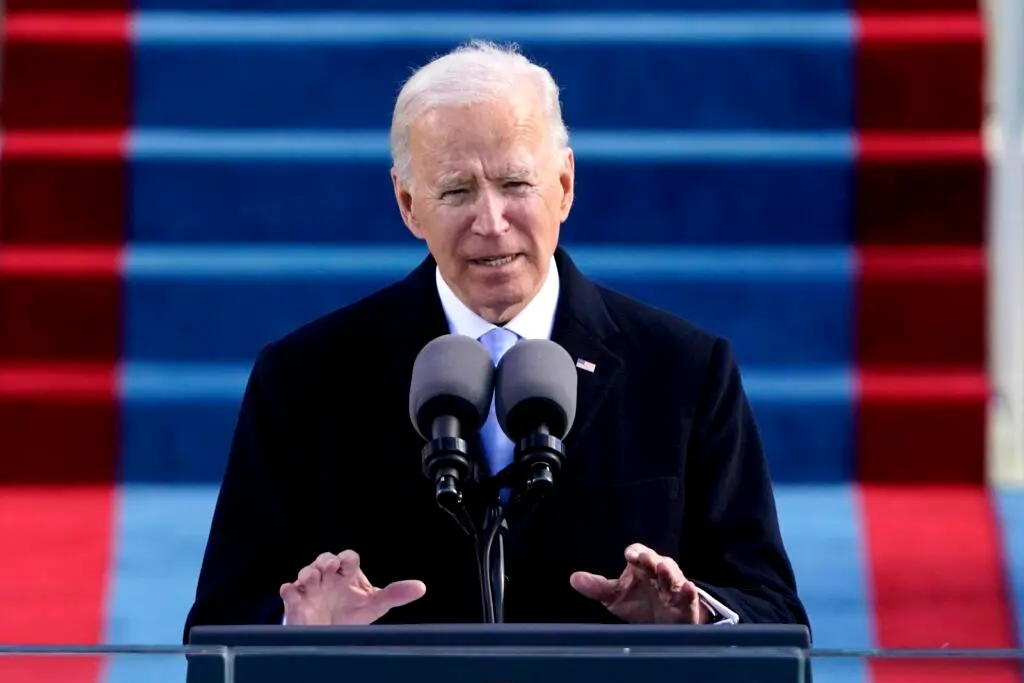
The presidential campaign for 2024 is heating up by the week, as more candidates enter and others withdraw.
So far, three Republicans have launched campaigns for the party’s nomination, while potential Democratic candidates are waiting in the wings in anticipation of President Biden’s reelection bid.
The field of Republican presidential candidates is expected to grow as campaign season heats up, but with the first presidential primary nearly a year away, a lot can change before voters go to the polls.
Here is the current field of candidates as well as those who may run.
The incumbent
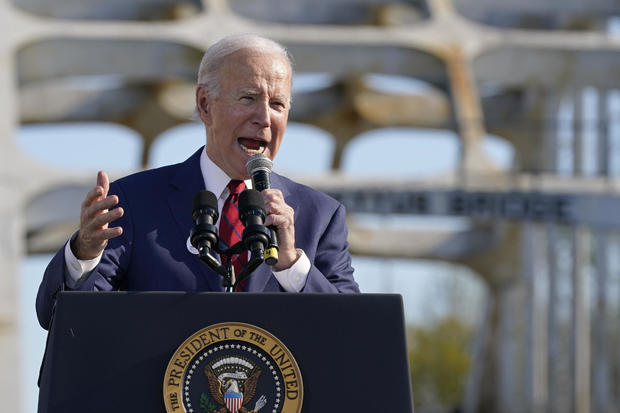
President Biden
Mr. Biden has stated his “intention” to run for reelection, and first lady Dr. Jill Biden has stated that her husband “has not finished what he’s started.” Mr. Biden, on the other hand, has yet to launch his campaign.
Still, in the weeks since his State of the Union address on Feb. 7, the president has been on the road touting his administration’s accomplishments while criticizing Republicans for their positions on Medicare and Social Security.
Mr. Biden’s announcement would come as a special counsel is investigating classified documents discovered at his former office at a think tank and his home in Wilmington, Delaware.
The Republican candidates
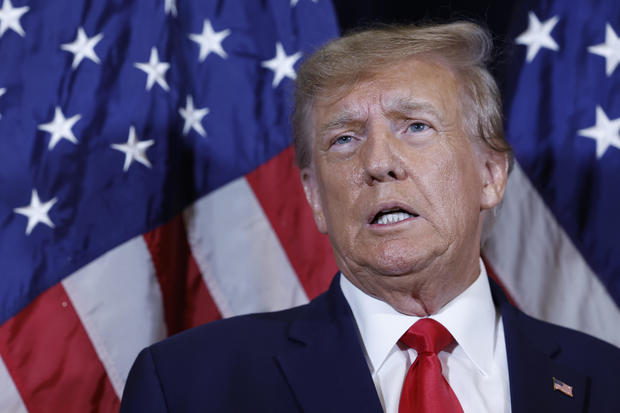
Trump was the first candidate to formally declare his candidacy for president in 2024, launching his campaign in a November speech from his South Florida resort, Mar-a-Lago. Trump has spent little time on the campaign trail since then but has recently increased his travel to Iowa and New Hampshire, the first two states on the Republican primary calendar.
Trump, widely regarded as the Republican Party’s frontrunner for the nomination, delivered the keynote address at the Conservative Political Action Conference (CPAC) on March 4 after winning the straw poll of attendees.
While Trump remains popular within the party, his legal problems cast a shadow over his candidacy. There are ongoing investigations from local prosecutors in Fulton County, Georgia, and the district attorney in Manhattan, in addition to two Justice Department investigations led by special counsel Jack Smith — one into his handling of classified documents discovered at Mar-a-Lago, and the second into efforts to overturn the results of the 2020 presidential election.
Nonetheless, Trump told reporters at CPAC that an indictment would not prevent him from running for president.
“I wouldn’t even consider leaving,” the former president said when asked if he would remain in the race if charged.
Nikki Haley
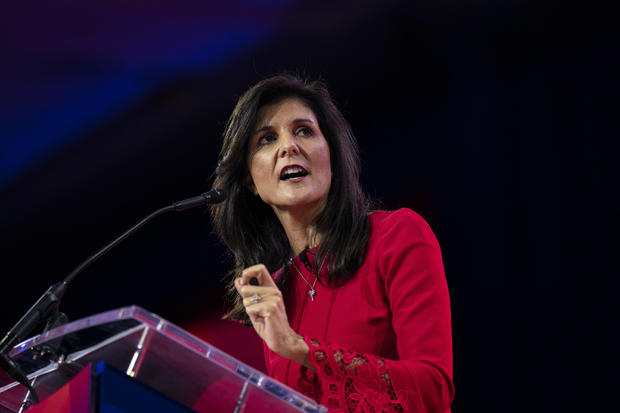
Haley, the former governor of South Carolina and the United States ambassador to the United Nations under Trump, entered the race for the Republican presidential nomination in mid-February, becoming Trump’s first challenger.
In her campaign, Haley, 51, has described herself as part of a new generation of Republican leadership and proposed mandatory mental competency tests for politicians over the age of 75 — a subtle dig at Trump, 76, and Mr. Biden, 80.
Haley was born in Bamberg, South Carolina, the daughter of Indian immigrants, and served two terms as governor. She served as the United States’ top diplomat at the United Nations from January 2017 to December 2018.
Vivek Ramaswamy
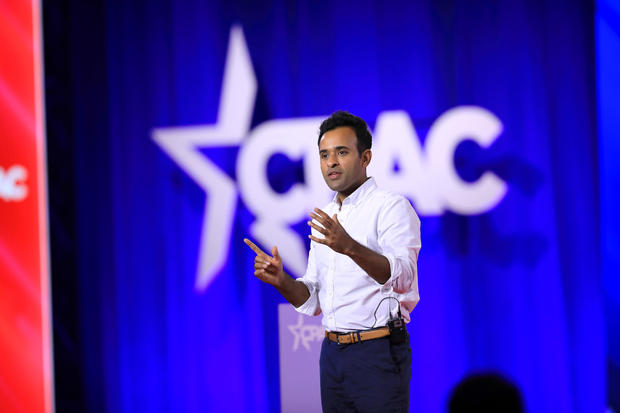
Ramaswamy, a former biotech executive, is regarded as a longshot for the Republican nomination, but he is only the third Republican to enter the race so far.
Ramaswamy, who is 37 years old and has a net worth of approximately $600 million, has declared himself an “anti-woke” capitalist and has criticized corporate investment based on environmental, social, and governance principles.
Ramaswamy is a Cincinnati native with ties to Sen. J.D. Vance and major GOP donor Peter Thiel.
The Democratic candidates
Marianne Williamson
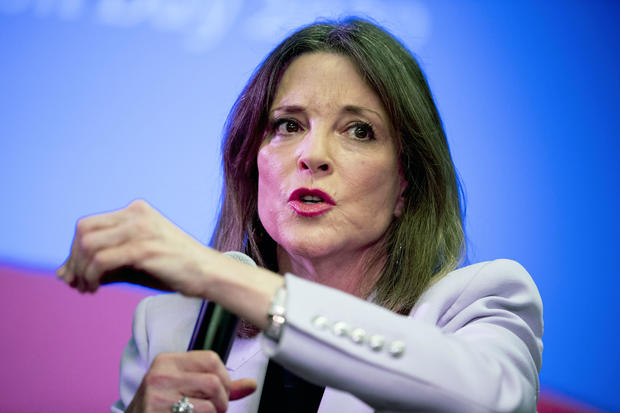
Williamson is the first Democrat to officially declare her candidacy, despite indications that the president will seek re-election.
Williamson’s decision to run places her as the first primary challenger to Mr. Biden, though she is unlikely to win the Democratic nomination.
Williamson, 70, is an author and spiritual adviser who ran for the Democratic nomination in 2020 but fell short in a crowded field. After dropping out of the race, she backed Andrew Yang in the Iowa caucuses.
The Republicans who are expected to run
Tim Scott
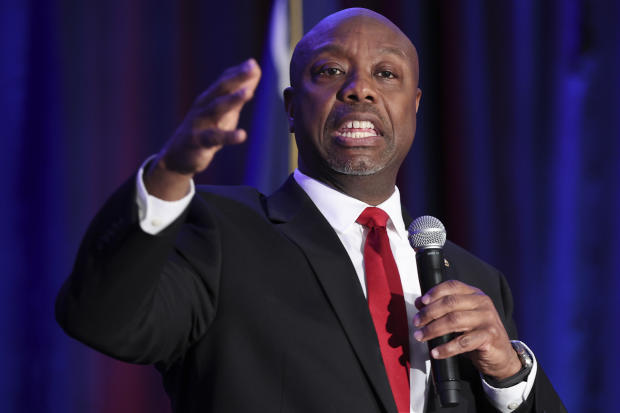
Scott, of South Carolina, is the only Black Republican senator, and a trip to Iowa in February fueled speculation that he might run for president.
According to Axios, Scott’s recent hiring of former GOP Sen. Cory Gardner and a longtime GOP operative to lead his super PAC Opportunity Matters adds to the buzz about his political ambitions.
In February, he also went on a listening tour in his home state of South Carolina, another early primary state.
Ron DeSantis
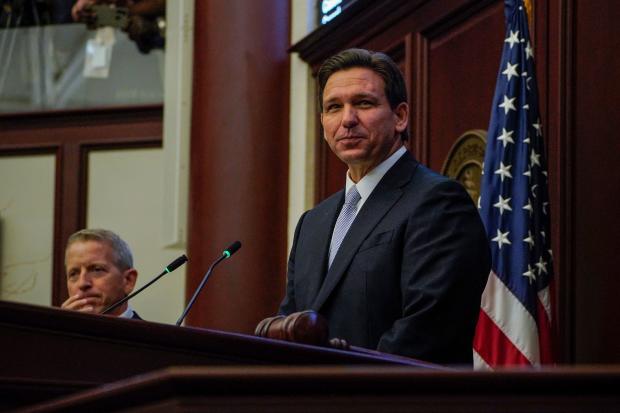
Though he hasn’t formally declared a presidential run, Florida’s governor is widely regarded as Trump’s main rival. DeSantis is in his second term as governor, and he has gained national attention for his COVID-19 policies and embrace of the culture wars during his time in Tallahassee.
DeSantis has also gotten involved in education, reshaping Florida’s public education policies and running for local school board seats in the 2022 election cycle. His efforts as governor earned him favor with Republican voters, and while he hasn’t launched a campaign, DeSantis plans to promote his new book in Iowa, New Hampshire, and Nevada, another early-voting state.
DeSantis skipped CPAC this year, instead speaking to donors at a conservative retreat.
Chris Sununu
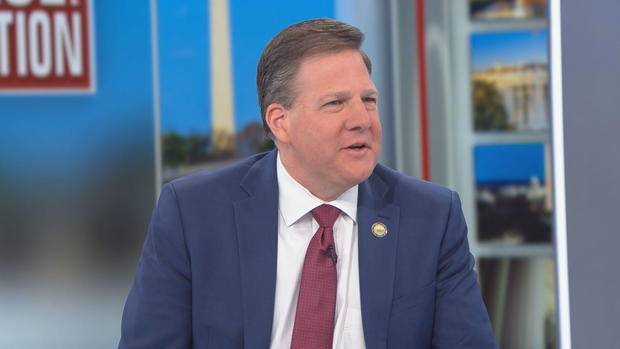
Sununu, the governor of New Hampshire, has been outspoken in his criticism of Trump, and he gave a preview of his pitch to voters in an interview with “Face the Nation” last month, in which he promoted a “New Hampshire model” of leadership.
The American people, according to Sununu, are “tired of extreme candidates” and partisan gridlock.
Sununu decided against running for the Senate in 2021 to challenge first-term Democrat Maggie Hassan, instead opting to run for a fourth term as governor, which he won in November.
Mike Pompeo
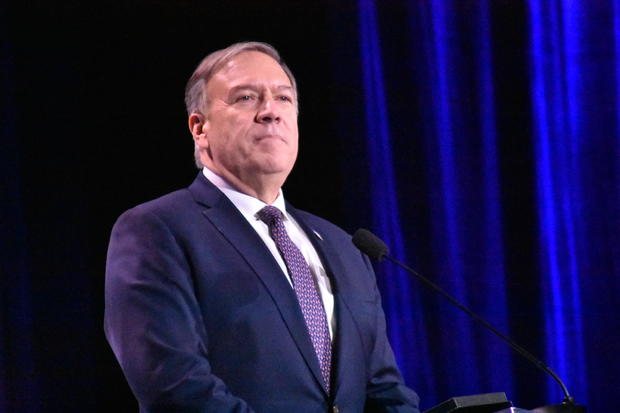
Pompeo served as director of the CIA and secretary of state during Trump’s one-term presidency, and he, like Pence, has stated that he will decide whether to run for president by the spring.
In an interview with “CBS Mornings” in January, Pompeo stated that Trump’s decision to run for president a third time has no bearing on his own decision.
Pompeo published a book detailing his time in the Trump administration in January, in which he criticizes Haley and claims she tried to replace Pence as vice president. However, Haley denied his claims, telling Fox News that they are “lies and gossip to sell a book.”
Mike Pence
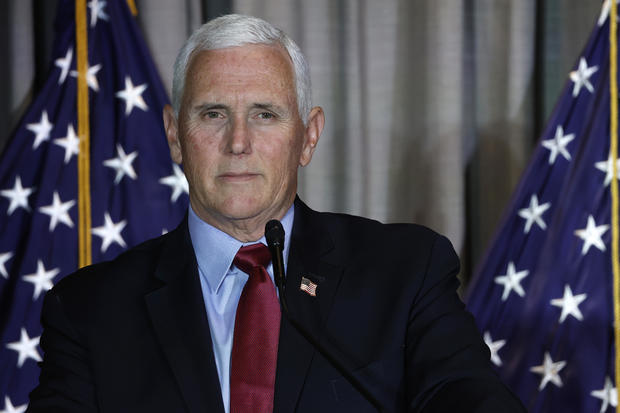
The former vice president and Indiana governor has hinted at a presidential run and stated that he will make a decision on his political future by the spring. Pence, on the other hand, has stated that the GOP should move on from Trump.
“I believe this party and this country will have new leadership,” he told CBS News in January.
Pence has also refused to commit to supporting Trump if he becomes the Republican nominee, instead stating that he believes GOP voters will vote “wisely again” in 2024 and that “different times call for different leadership.”
While Pence has supported Trump administration policies, he has also criticized Trump for his actions on Jan. 6, saying in November that Trump’s words were “reckless” and endangered him and his family, who were on Capitol Hill that day for the joint session of Congress.
Who’s not running
Larry Hogan
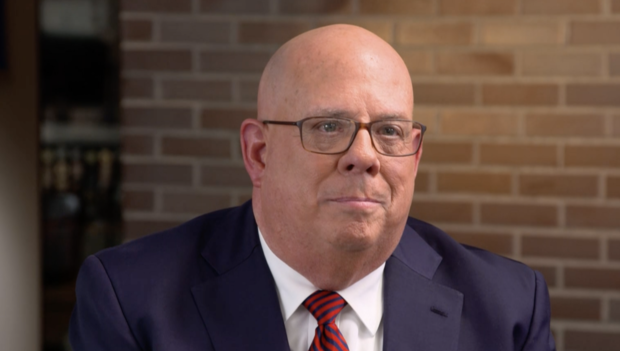
After “serious consideration,” the former Maryland governor announced on Sunday that he would not seek the Republican presidential nomination.
Hogan stated that his decision not to run for president may make Trump’s nomination more difficult.
