


Apple recently unveiled its latest iPhone 15 and 15 Pro models, and they come with significant upgrades in their camera systems. Apple’s recent focus on improving photography in its flagship phones reflects the fact that other hardware changes in these devices have been relatively incremental in recent years.
Both the iPhone 15 and the more advanced 15 Pro models have seen improvements in their cameras this year, as expected. However, Apple has also introduced new features and options that align with a growing trend in the photography industry: the emphasis on photographic character.
In today’s smartphone landscape, flagship devices from major manufacturers no longer produce subpar photos. Even mid-range phones now come equipped with high-quality cameras as a standard feature. Therefore, the key to differentiation lies in lateral moves and creativity, as well as ensuring that users can achieve a unique and personalized photographic style.
One noteworthy addition to this year’s iPhone lineup is the option to set a default focal length for the main camera on the 15 Pro. Users can choose from focal lengths equivalent to 24mm, 28mm, and 35mm. These focal lengths are commonly preferred in fixed-lens cameras designed for general use and street photography. They offer a range from a fairly wide-angle view to a tighter focal length typically associated with print photojournalism and documentary photography.
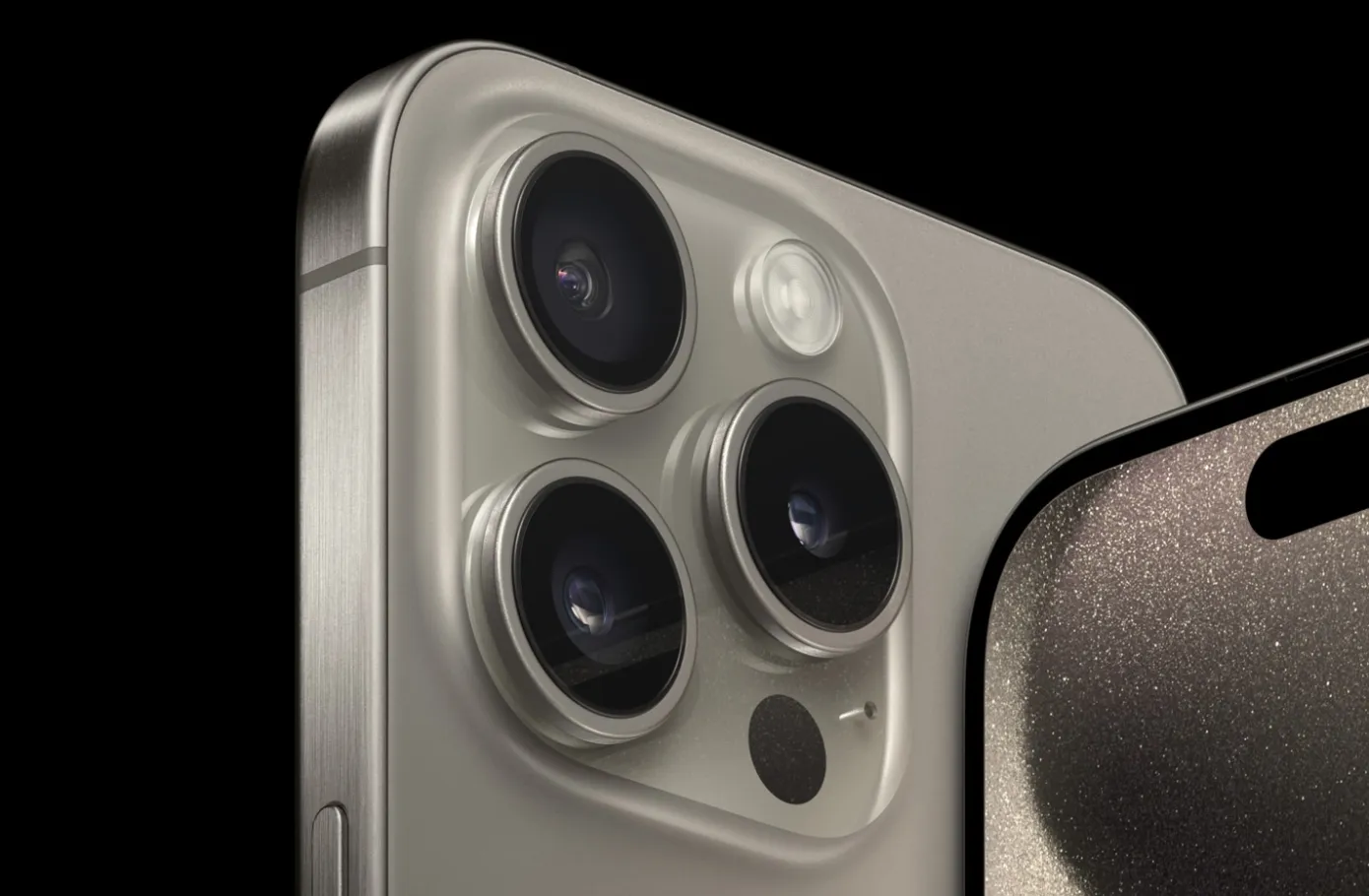
This feature allows users to move away from Apple’s predefined “standard defaults” for the built-in Camera app. By enabling users to set their preferred focal length, Apple is encouraging photographers to create their unique visual style.
Currently, users can already customize their photographic style by adjusting settings like contrast and color to apply instant visual effects to their photos. Additionally, users can opt to have the camera capture images in a RAW format, providing greater editing flexibility after the fact. What’s new this year is the option to capture photos in Apple’s default HEIF high-efficiency format at the maximum 48 MP resolution the sensor can handle.
While choosing a default focal length may seem like a minor feature, altering the framing of a shot can significantly impact its character. This change may not be as immediately noticeable as adjustments to contrast and saturation, but it has the potential to add a unique and recognizable “quality” to your photos over time.
For many people, photos serve as a means to capture moments they want to remember. However, the quality of these memories is not static; it is influenced by personality and perspective. Enabling individuality and character in photo capture is not just a luxury for smartphone cameras going forward—it is where the most significant differentiation will occur. In a market where many technical and performance issues have already been resolved, these personalized touches could become the standout feature that sets one device apart from another.
