


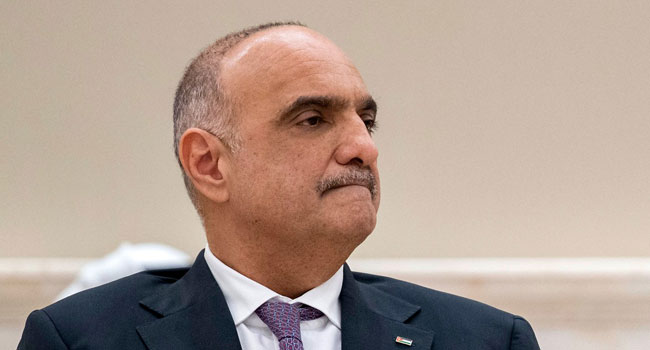
Jordan’s Prime Minister Bisher Khasawneh submitted his resignation to King Abdullah II on Sunday, following parliamentary elections marked by frustration over the Gaza war, according to state media reports.
In Jordan, it is customary for the government to resign after legislative elections, as the constitution grants the king the authority to appoint the prime minister. The parliament, which has limited powers, does not hold this responsibility.
The Islamic Action Front (IAF), Jordan’s leading Islamist party and a political wing of the Muslim Brotherhood, emerged as the top winner in Tuesday’s election, securing 31 of the 138 seats in parliament. This marks the party’s largest representation since 1989, despite the voter turnout being a low 32%.
The IAF’s success is seen as a reflection of public frustration, especially regarding the country’s economic challenges and the ongoing war between Israel and Hamas in Gaza. Jordan signed a peace treaty with Israel in 1994, but the conflict has sparked regular protests, with some calling for the treaty’s dissolution. Nearly half of Jordan’s population is of Palestinian descent, making the Gaza conflict a deeply sensitive issue.
Khasawneh, who had been prime minister since October 2020, led the government through challenging times, but now steps down as is customary after elections. Jordan’s bicameral parliament includes both an elected house and a 69-member senate, which is appointed by the king.
The Gaza war has also impacted Jordan’s vital tourism sector, which contributes about 14% to the kingdom’s GDP. With an unemployment rate of 21% in early 2024, Jordan remains heavily reliant on foreign aid, particularly from the United States and the International Monetary Fund.
