


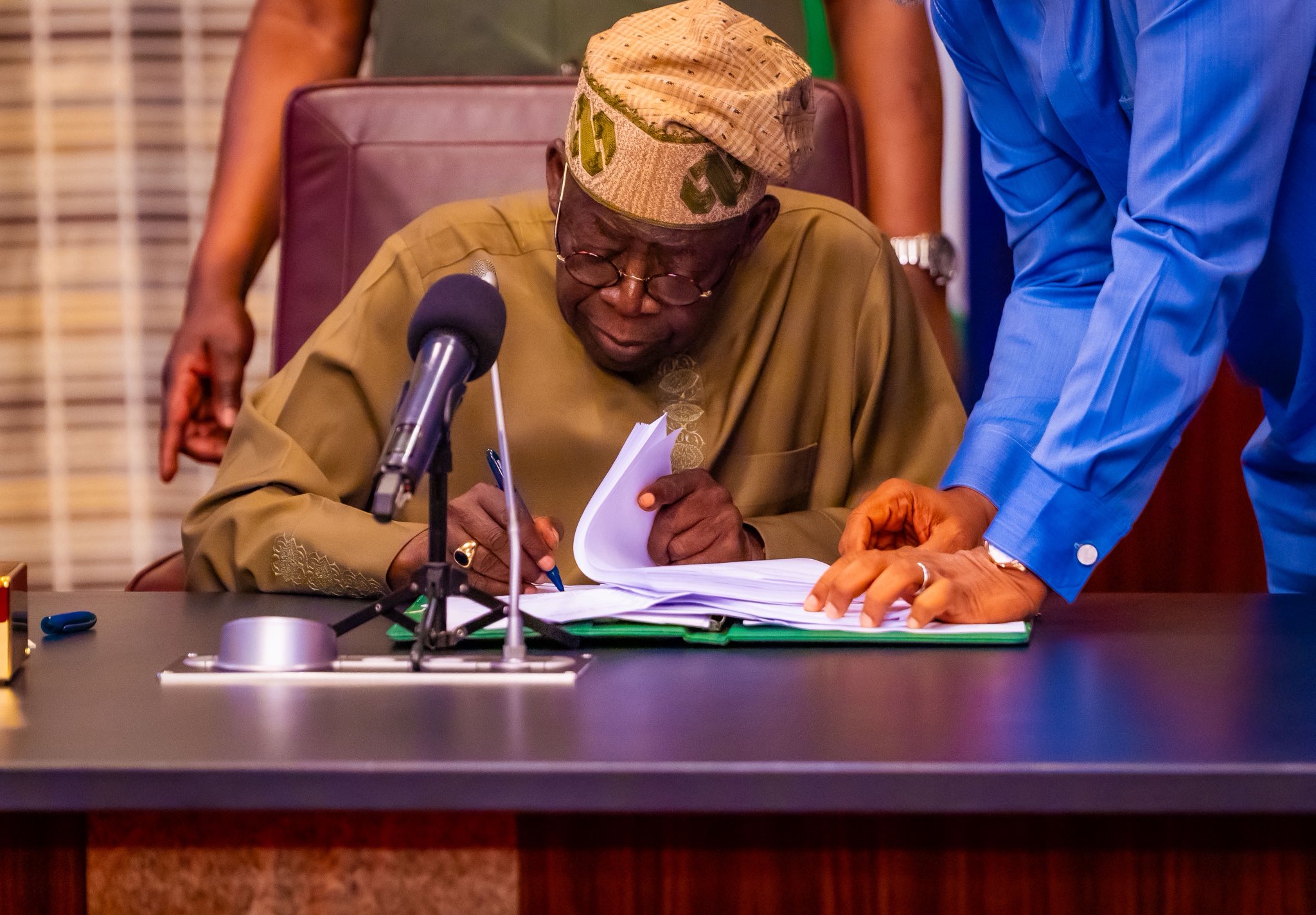
President Bola Tinubu has officially reached out to the House of Representatives, asking for the green light to make some changes to Nigeria’s 2025–2026 external borrowing plan. The goal? To help bridge unexpected financial gaps.
In a letter signed by Finance Minister Wale Edun and read aloud by Speaker Abbas Tajudeen during Wednesday’s plenary, it was revealed that an additional $47 million is needed to support the Lagos-Calabar coastal highway project—bumping the total from $700 million to $747 million.
Another key part of the plan includes the Nigeria Universal Communication Access Project. With a proposed $300 million investment, it aims to bring mobile network coverage to more than 21 million people in 4,834 previously unconnected communities by installing 7,000 telecom towers, particularly in rural and underserved areas.
Just two weeks ago, the federal government secured a $747 million loan to kickstart the first phase of the coastal highway project. According to the Finance Ministry, this deal—arranged with Deutsche Bank—is the biggest road infrastructure financing agreement Nigeria has ever landed.
This first stretch of the project covers 47.47 kilometers, forming part of a massive 700-kilometer highway that will eventually link Lagos to Calabar in Cross River State.
Speaking on the development, Ministry spokesperson Mohammad Manga described the loan as a game-changer for the country’s infrastructure ambitions. He emphasized that it reflects the administration’s commitment to transforming Nigeria’s road network.
Meanwhile, the Senate has also approved Tinubu’s broader external borrowing plan for 2025–2026. The package includes over $21 billion in foreign loans, €4 billion, ¥15 billion, a $65 million grant, and ₦757 billion in domestic bonds—paving the way for full implementation of next year’s budget.
