


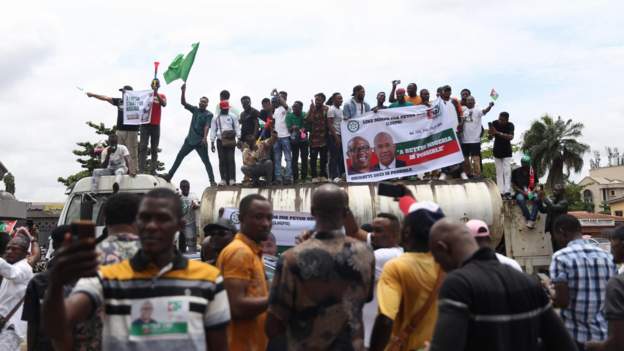
Politics is the last thing on many Nigerians’ minds on the final day of campaigning.
Long lines form outside several banks on Adeola Adeku, a major commercial road in Victoria Island’s affluent neighborhood.
Those in line appear tired and weary; some have been waiting for hours. Others are enraged.
When the security guards ask them to step back from the gates, people outside one branch begin shouting and jostling.
“The country is in disarray,” someone shouts from a passing car.
A young man asks if I have any cash because he doesn’t have enough money to get to work and hasn’t eaten in days.
As a result of the Central Bank’s decision to redesign the country’s currency, the naira, late last year, there is a severe cash shortage.

People are now queuing for hours outside banks to obtain the newly designed currency, which has been in short supply.
It’s difficult to predict how the cash crunch will affect voting on Saturday.
Some are concerned that they will not have enough money to return to the areas where they first registered to vote.
However, the outpouring of rage over the botched new cash distribution may encourage voters to cast ballots and have their voices heard.
They will expect the next president to address not only the crisis but also the country’s ailing economy.
Unemployment has quadrupled in the eight years since President Muhammadu Buhari took office.
Inflation is now at 21%, with food inflation even higher.
Many staples, such as rice and oil, have doubled in price in Lagos markets in the last year. Nigeria’s next president will face a lengthy to-do list.
