


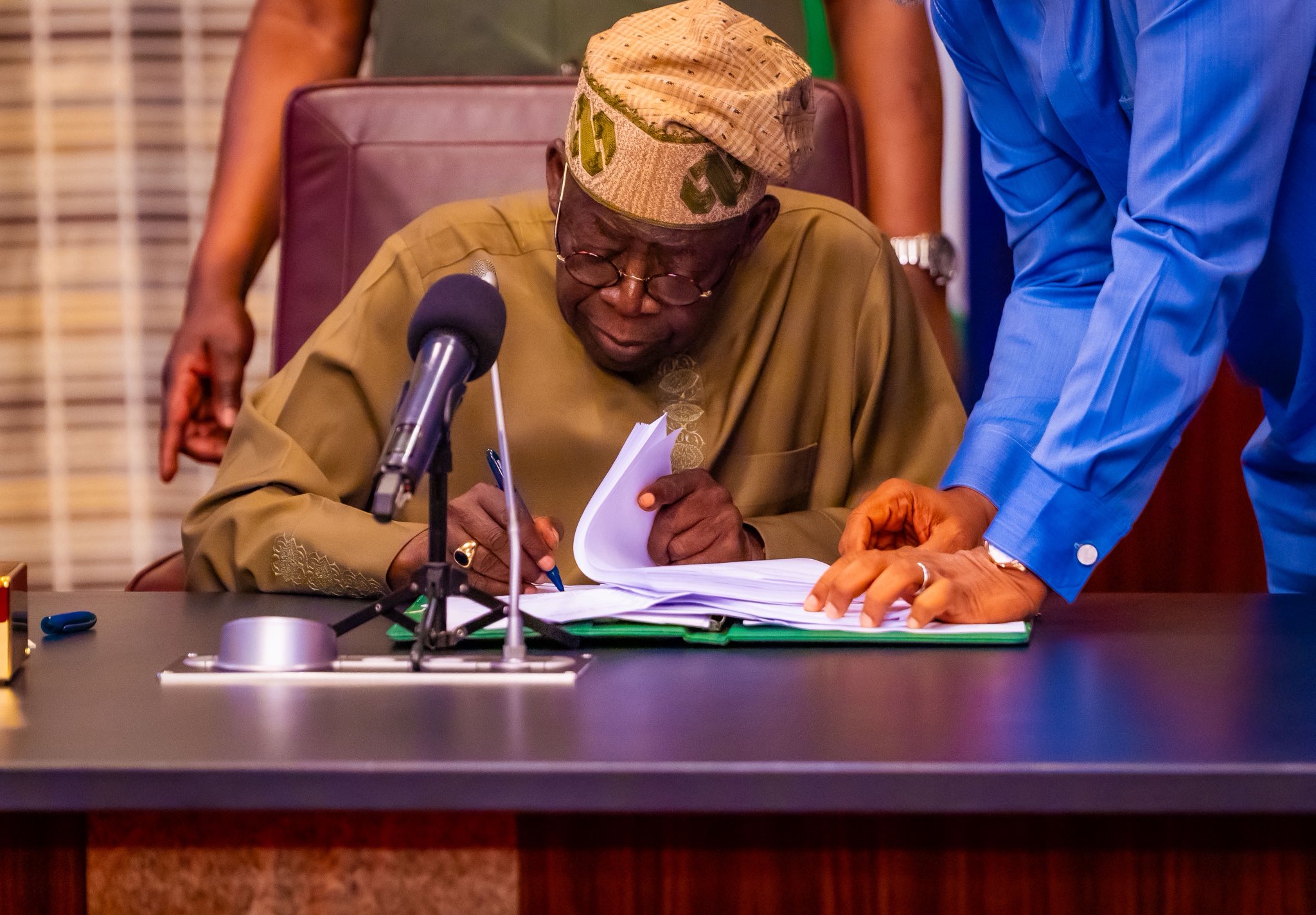
Senate Backs Tinubu’s $21bn Borrowing Plan for 2025 Budget Implementation
The Nigerian Senate has approved President Bola Tinubu’s request to secure over $21 billion in external loans for the 2025–2026 fiscal period, giving full backing to the implementation of the 2025 national budget.
This funding package includes $21.19 billion in foreign loans, €4 billion, ¥15 billion, a $65 million grant, and an additional ₦757 billion in domestic borrowing through government bonds. Also included is a plan to raise $2 billion through foreign-currency instruments sourced from within the country.
Presenting the committee report, Senator Aliyu Wamako, who chairs the Senate Committee on Local and Foreign Debt, noted that the proposal had been pending since May due to the National Assembly’s recess and incomplete submissions from the Debt Management Office.
Senator Olamilekan Adeola, head of the Appropriations Committee, pointed out that the borrowing had already been accounted for in the Medium-Term Expenditure Framework and was a key component of the 2025 budget.
“With this approval, we now have all the funding streams, including loans, required to carry out the budget in full,” Adeola said.
Several senators voiced their support, noting that the loan structure aligns with common global practices for financing national development.
Senator Sani Musa added that the disbursement of the funds would be spread over six years, not confined to just 2025.
“No economy grows without borrowing,” he stated. “What we are doing is in line with international standards.”
Supporting the initiative, Senator Adetokunbo Abiru, who leads the Senate Committee on Banking and Financial Institutions, said the loans are long-term and concessional—falling well within the boundaries of Nigeria’s debt regulations.
“Some of these loans stretch over 20 to 35 years and are specifically tied to development in infrastructure and human capital,” he explained.
Still, not everyone was completely on board. Senator Abdul Ningi expressed concern over how transparently the loans would be distributed and whether all regions would benefit equally.
“Our people deserve to know how much is being borrowed on their behalf, and where it’s going,” he said, calling for stricter oversight and fair allocation.
The funds are expected to be channelled into critical sectors like infrastructure, agriculture, security, housing, electricity, and digital expansion.
One key highlight is a $3 billion allocation for the reconstruction of the Eastern Rail Corridor, connecting Port Harcourt to Maiduguri.
Senator Victor Umeh applauded this development, saying,
“This is the first time I’ve seen such a substantial amount—$3 billion—earmarked for reviving the eastern rail line. That alone earns my full support.”
Deputy Senate President Jibrin Barau praised the loan committee for its inclusive approach, describing the plan as a reflection of the administration’s Renewed Hope Agenda.
“Every region is represented. No one is left behind,” he said. “But it’s crucial that all funds be used strictly for capital projects, as outlined by the law.”
