


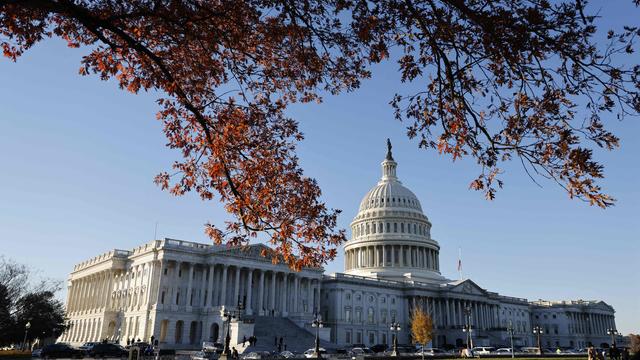
As lawmakers cross one more item off their to-do list for the year, a plan to repeal the COVID-19 vaccine requirement for members of the U.S. military and allocate almost $858 billion for national security was approved by the House on Thursday.
As lawmakers work to increase the country’s military competitiveness with China and Russia, the bill allocates approximately $45 billion more for defense programs than President Joe Biden sought. This is the second year in a row that Congress has significantly outspent the president’s request.
By a vote of 350 to 80, the bill was approved by the House. 45 Democrats and 35 Republicans abstained. It now needs to pass the Senate with little difficulty before going to the president for his signature to become law.
Democrats gave down to Republican requests to remove the COVID-19 vaccination mandate for service personnel in order to secure bipartisan backing for the bill. The measure instructs Defense Secretary Lloyd Austin to revoke the mandate he imposed in a letter in August 2021. He had just recently expressed support for retaining the mandate in place.
Democratic Rep. Adam Smith, chairman of the House Armed Services Committee, told his fellow lawmakers that it was the proper decision at the time to enforce the vaccine mandate.
Smith remarked, “It saved lives and made sure our force was as prepared as it could be in the face of the epidemic.” However, he said that the mandate only called for the initial immunization and that the protection has already worn off.
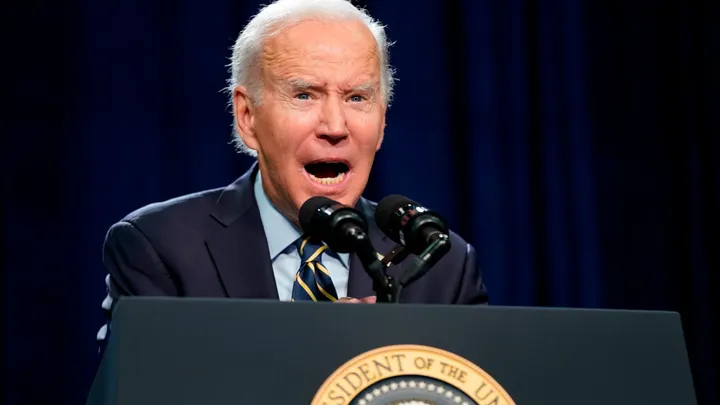
Smith declared that it was time to alter the policy.
Republicans claimed that the mandate hindered efforts at retention and recruitment. The chairman of the House Armed Services Committee, Rep. Mike Rogers, a leading Republican, stated that he plans to investigate who was negatively impacted by the mandate in the upcoming Congress “so we can try to revisit that and make them whole to the extent desirable.”
When they denied the inoculation, more than 8,000 active-duty service men were dismissed for disobeying a valid order.
According to Rogers, who will lead the Armed Services Committee in the upcoming Congress, “some of the people who have moved on won’t want to come back.”
Smith declared that he was against attempts to reward military personnel who defied orders.
Orders are mandatory in the American military, according to Smith. “I cannot think of anything that would more dramatically damage the good order and discipline within our military,” the speaker continued, “if Congress expresses the belief that they are.”
For years, according to military commanders, soldiers have been mandated to receive up to 17 vaccinations in order to protect the force’s health, particularly that of those who are deployed abroad. If they aren’t already immunized, recruits who are reporting to basic training or military schools receive a series of shots on their first day, including those for measles, mumps, and rubella. In the fall, they usually receive flu shots.
Prior to the COVID outbreak, service authorities claim that there were hardly any troops who asked for religious or other exceptions to any of the mandated vaccinations.
However, the politicization of the COVID-19 vaccine led to a flood of requests for exemptions from service members. Only roughly 190 religious exemption requests have been granted; as many as 16,000 are still pending. There have also been very few temporary and permanent medical exemptions given.
Despite receiving a lot of attention, the repeal of the COVID-19 vaccine requirement only occupies one paragraph of the 4,408-page bill.
The legislation governing defense policy is essential in determining how the military will develop. It establishes the maximum number of service members permitted in each of the armed branches. It also establishes salary and benefits while authorizing funding for particular significant weapons programs. The law for this year allows funding to sustain a $4.6% pay raise for military personnel and civilian employees of the Defense Department.
On Thursday, Senate Majority Leader Chuck Schumer expressed his desire for a bipartisan compromise and “pretty swift” action.
Karine Jean-Pierre, the press secretary for the White House, defended the Pentagon’s COVID immunization program but asserted that Mr. Biden will evaluate the measure “in its entirety.”
The Republicans in Congress have decided that they would rather fight for our troops’ health and well-being than defend them, according to Jean-Pierre. And we think it’s a mistake, too.
