


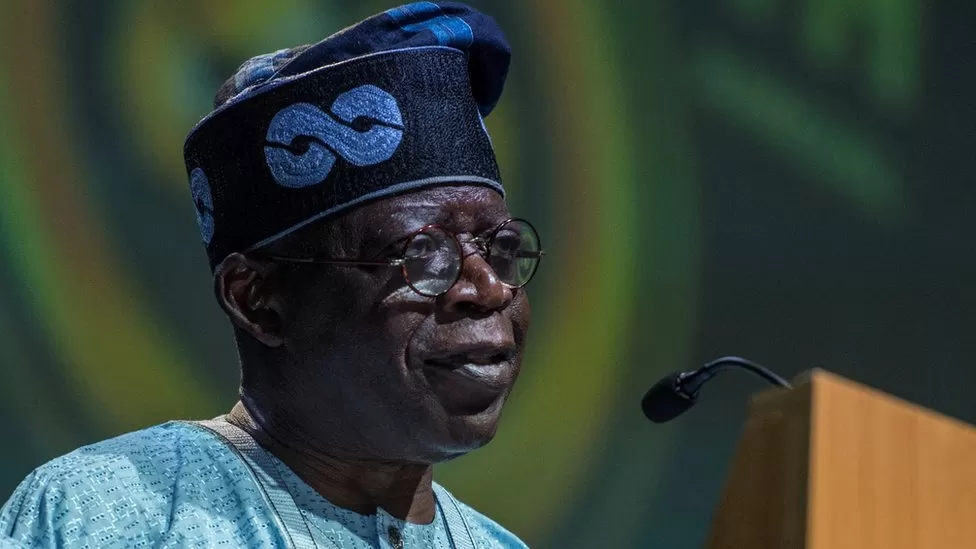
Bola Ahmed Tinubu, the candidate of the ruling party, is leading Nigeria’s most contentious general election since the country’s return to democracy more than two decades ago.
The Independent National Electoral Commission has officially declared 14 of the 36 states so far (Inec).
Mr. Tinubu now has 44% of the votes cast so far.
Atiku Abubakar, the main opposition candidate, is in second place, followed by Labour’s Peter Obi.
To win the presidency, a candidate must receive the most votes overall and 25% of the vote in 25 of Nigeria’s 36 states.
However, the electoral process has been fraught with controversy.

Both major opposition parties walked out of the national collation center in the capital, Abuja, where results were being announced late Monday.
They accused the electoral body of being opaque about a new electronic voting system, which the commission denies.
Observers from the European Union said the electoral body’s poor planning and communication undermined trust in the process.
Major upsets have also occurred in the polls. Mr. Tinubu was defeated in Lagos, his long-held stronghold, by a surprise third-party candidate, Peter Obi, who has galvanized support among Nigeria’s youth.
Mr. Tinubu’s main rival, Mr. Abubakar, won Katsina, the home state of outgoing President Muhammadu Buhari, who is backing Mr. Tinubu.
Nigeria’s new president will face a slew of challenges, including escalating insecurity, rising unemployment, and a faltering economy.
