


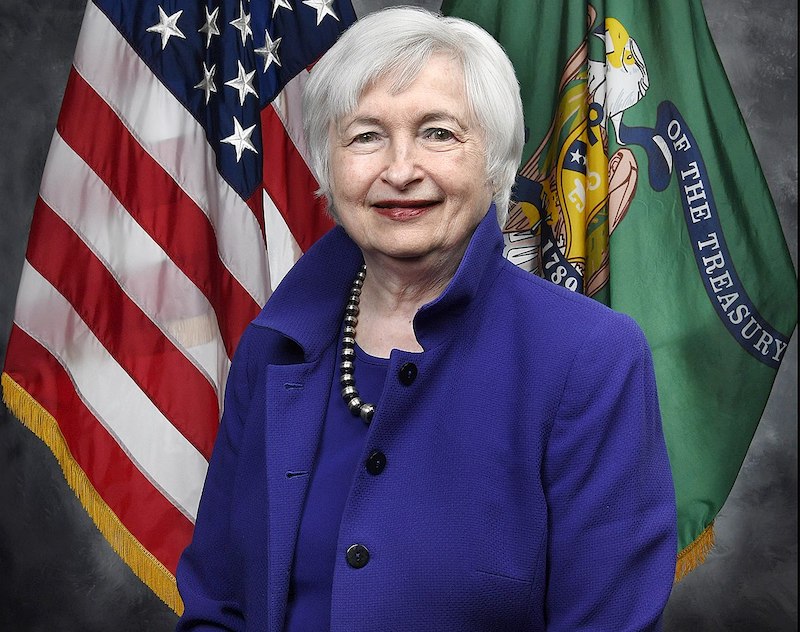
Treasury Secretary Janet Yellen said on Monday that if Congress does not raise or suspend the debt limit, the United States may be unable to pay its bills as early as June 1.
“After reviewing recent federal tax receipts, our best estimate is that we will be unable to continue to satisfy all of the government’s obligations by early June, and potentially as early as June 1, if Congress does not raise or suspend the debt limit before that time,” Yellen wrote in a letter to lawmakers.
Her warning comes as Republican lawmakers and the Biden administration appear no closer to reaching an agreement on the debt than they were at the start of the year when she first raised concerns about a default.
Later that day, President Joe Biden called the four congressional leaders to discuss the debt limit and invited them to a meeting next week, on May 9, to discuss the debt limit as well as the fiscal year 2024 budget.
In response to Yellen’s letter, House Speaker Kevin McCarthy retorted, “And there is a bill sitting in the Senate as we speak that would put the risk of default to rest.” He went on to say, “The Senate and the President need to get to work — and soon.”
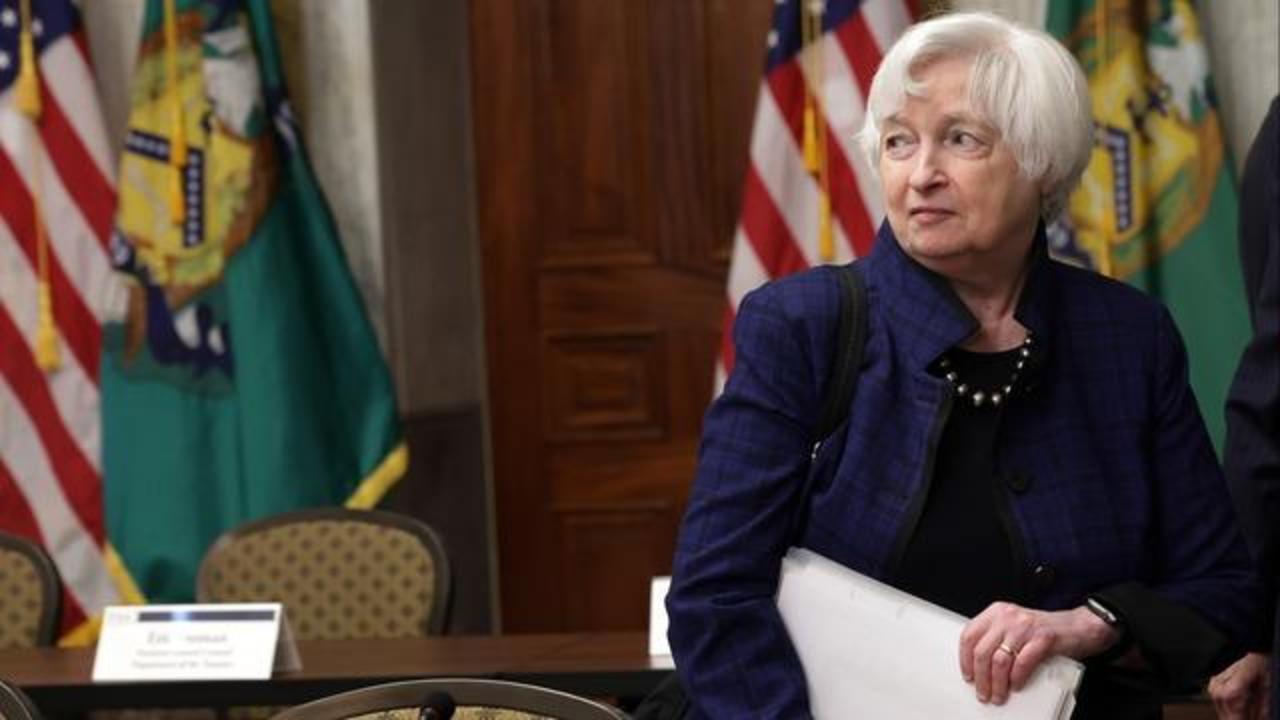
Several Senate Republicans said Yellen’s letter on the debt ceiling should prompt Mr. Biden to engage in debt-ceiling negotiations.
“I think Janet Yellen is just carrying his water to try to convince people that he doesn’t need to be in the room,” said West Virginia Republican Senator Shelley Moore Capito.
When asked if Senate Republicans would support a clean debt ceiling increase — that is, one without any other legislation attached — Texas Sen. John Cornyn said no, because it “won’t pass the House, won’t pass the Senate.”
Democratic Senator Brian Schatz of Hawaii believes Democrats should not strike a deal with Republicans to avoid default.
“The premise here is that there should be no policy concessions in exchange for preventing default and that no political party should ever threaten to collapse the American economy just to enact their policy prescriptions,” Schatz explained.
Yellen first wrote to Congress in January to inform them that the United States would have to resort to “extraordinary measures” to pay its bills. She stated at the time that the United States could default as soon as June if Congress did not act, though she did not specify when in June this could occur. Yellen said it would be impossible to provide an exact date, but she would continue to keep Congress informed.
“Given the current projections, it is imperative that Congress act as soon as possible to increase or suspend the debt limit in a way that provides longer-term certainty that the government will continue to make its payments,” Yellen wrote.
She also warned lawmakers that waiting until the last minute to reach an agreement can “cause serious harm to business and consumer confidence, raise short-term borrowing costs for taxpayers, and negatively impact the credit rating of the United States.”
“Failure by Congress to raise the debt ceiling would cause severe hardship to American families, harm our global leadership position, and raise concerns about our ability to defend our national security interests,” Yellen wrote.
Economists have been closely monitoring revenue as the debt limit approaches. Earlier this year, the Bipartisan Policy Center predicted that the so-called “x-date” would arrive in the summer or early fall, but with tax receipts falling in the last month, some bank economists began to shift their timelines for when the country could default.
The Congressional Budget Office also stated on Monday that the Treasury Department is at “a significantly greater risk” of running out of funds in early June due to lower-than-expected tax receipts in February.
