


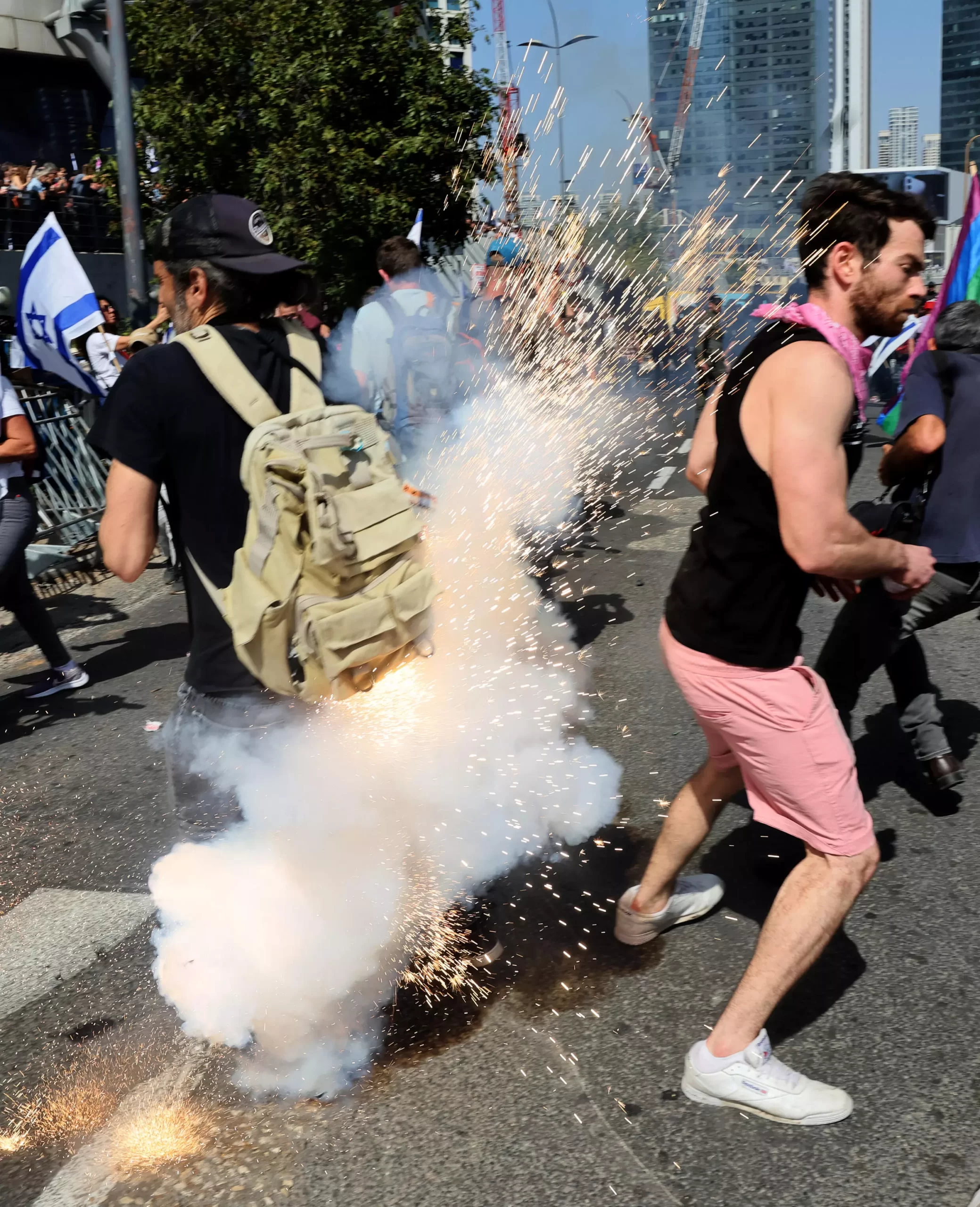
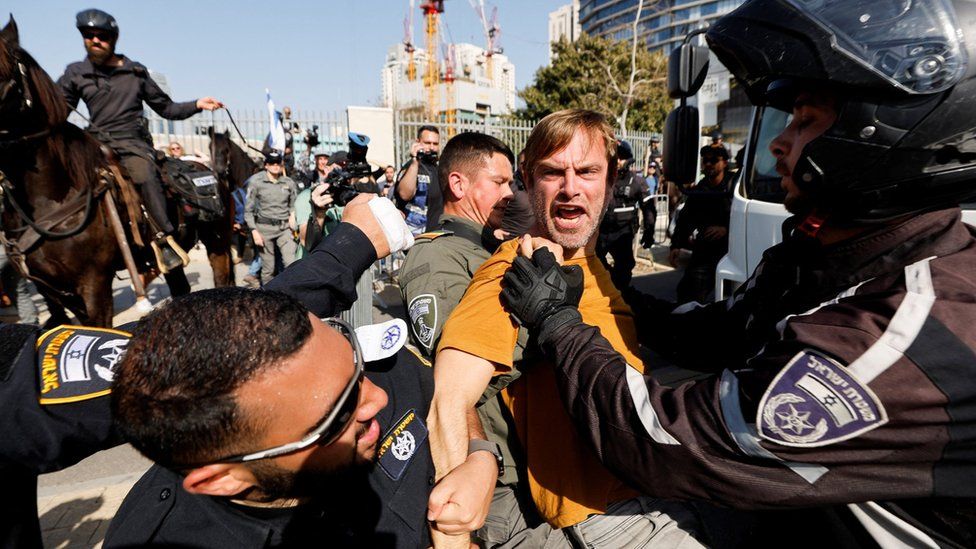
As lawmakers held a preliminary vote on the latest contentious bill, Israeli police clashed with protesters rallying against the government’s judicial reform program, which critics say threatens democracy.
Demonstrators blocked some streets in Tel Aviv, and police used stun grenades, water cannons, and officers on horseback in a rare use of force in the coastal city, according to AFP journalists.
Some 39 people were arrested for “allegedly rioting and not obeying instructions by police officials”, police said in a statement.
A spokesman for Tel Aviv’s Ichilov hospital told AFP that 11 injured protesters had arrived.
“The right to demonstrate is not the right to block the country,” Prime Minister Benjamin Netanyahu said in a televised statement, accusing demonstrators of crossing “a red line”.
“A sovereign country cannot tolerate anarchy,” added Netanyahu, who reclaimed power late last year as the leader of a coalition that included ultra-Orthodox Jewish and far-right allies.
The premier earlier stressed his support for the police, who “are acting against lawbreakers who are disrupting Israeli citizens’ daily lives”.
The rally in Tel Aviv came as lawmakers in Jerusalem passed a bill limiting the chances of a prime minister being impeached in the preliminary reading.
Opponents argue that the measure is intended to protect Netanyahu, who is on trial for corruption charges that he denies.
The legislation, which proposes a three-quarter parliamentary majority to impeach a premier due to physical or mental incapacity, was approved by MPs by a vote of 62 to 20.
Following the first vote, the bill will be referred to a parliamentary committee to determine whether it should be scrapped or returned to the chamber to continue the legislative process.
The broader judicial reform package, announced in January, includes measures that critics say are designed to give politicians more power at the expense of the judiciary.
In addition, lawmakers approved in preliminary reading a bill to impose the death penalty on “terrorists,” with 55 in favor and nine opposed.
Extremist politicians have tried and failed to pass such legislation in the 120-seat chamber on numerous occasions.
In civil courts, Israel abolished the use of the death penalty for murder in 1954, though it can still be applied in theory for war crimes, crimes against humanity, genocide, treason, and crimes against the Jewish people.
