


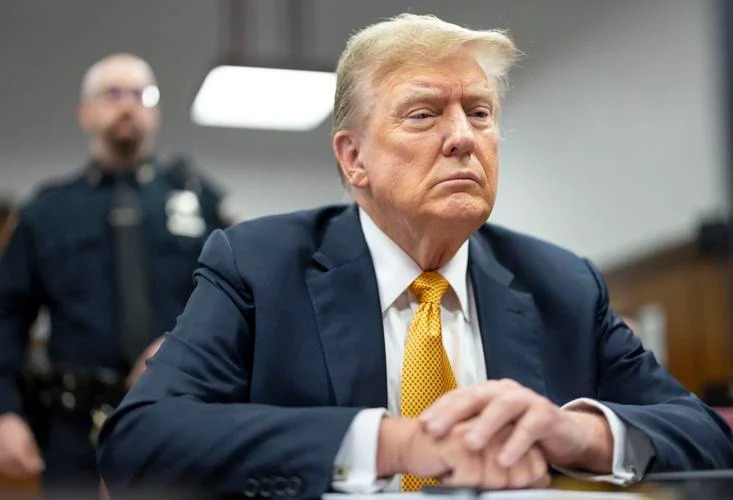
Donald Trump attended the closing arguments of his New York hush money trial on Tuesday, marking a pivotal moment as the jury prepares to decide whether he will become the first former president to face criminal conviction while running for the White House.
The defense team will kick off the arguments, aiming to convince the jury that Trump did not commit a crime when he paid to suppress a story about an alleged affair with adult film star Stormy Daniels just before his surprise 2016 election victory. Prosecutors will follow, arguing that Trump falsified business records to conceal the hush money payment, fearing it could jeopardize his campaign against Hillary Clinton.
The jury, whose identities have been kept confidential for their safety, could begin deliberations as soon as Wednesday. A guilty verdict might result in a prison sentence, creating unprecedented tension in the lead-up to the November presidential election, where Trump is a major contender against President Joe Biden.
Trump, 77, already holds the dubious distinction of being the first former president indicted on criminal charges, ranging from this hush money case to allegations of mishandling top secret documents and attempting to overturn the 2020 election results.

The New York case, which has involved over 20 witnesses over five weeks, is the only trial likely to conclude before the November election. If convicted, Trump could face up to four years in prison on each of the 34 counts, though legal experts believe a first-time offender like him is unlikely to serve jail time.
Trump is expected to appeal any conviction, and it would not disqualify him from running in the election. Throughout the trial, he has opted not to testify, avoiding potential pitfalls of cross-examination. Instead, he has used his court appearances to decry the process as a political maneuver by Democrats to hinder his campaign, while also criticizing Judge Juan Merchan.
Despite the trial, polls indicate that Trump’s support among right-wing voters remains strong. Prominent Republican supporters, including potential vice-presidential picks, have criticized the trial and shown solidarity by attending court sessions.
The judge anticipates that closing arguments will occupy the entire day on Tuesday, followed by his final instructions to the jury. A unanimous decision is required for a verdict; even one dissenting juror could lead to a mistrial, though prosecutors might then seek a new trial.
Key testimonies have come from Daniels and Trump’s former attorney Michael Cohen, who arranged the $130,000 hush money payment to prevent the story from harming Trump’s presidential bid. The defense has focused on discrediting Cohen, highlighting his past lies to Congress and his imprisonment for tax fraud.
Beyond the New York case, Trump faces further legal battles in Washington and Georgia over efforts to overturn the 2020 election results and in Florida over the retention of classified documents after leaving office.
